
The Silent Epidemic Disrupting Sleep and Relationships
It begins as a soft rumble and often escalates into a full-blown, wall-shaking crescendo. For millions, the soundtrack of the night is not one of peace, but of their partner’s snoring. The statistics are staggering and have only become more pronounced in the post-pandemic era, where stress and lifestyle changes have exacerbated sleep issues.
While the old data point of 65% of spouses disliking a snoring partner still holds true, a 2024 study by the National Sleep Foundation revealed a more alarming trend: chronic snoring is now a cited factor in 25% of couples who report significant relationship distress, with many resorting to separate bedrooms not by choice, but by necessity.
The cartoonish description of snoring as “tectonic” and “wall-rattling” is a coping mechanism, a thin veil of humor over a deep well of frustration, sleep deprivation, and genuine concern for a loved one’s health. This isn’t just about noise; it’s about the erosion of intimacy, the degradation of sleep quality for both individuals, and the potential warning sign of a serious medical condition: Obstructive Sleep Apnea (OSA).
Read Also:
How Does the BedJet 3 Work?
Proven Strategies for Better Sleep During Daylight Saving Time
Types of sleep and how to wake up feeling well-rested
How Much Sleep Do You Really Need? A Definitive Guide by Age Group
The search for a solution is a multi-billion dollar global industry, flooded with gadgets, apps, pills, and procedures, all promising a silent night. Among the most enduring and simplest solutions is the anti-snoring chinstrap. And one of the most recognized names in this niche is My Snoring Solution.
This guide is not a simple review. It is a deep dive into the world of snoring, the science behind mandibular advancement, and a thorough, evidence-based analysis of the My Snoring Solution chinstrap. We will move far beyond the 2018 perspective, incorporating the latest research, user experiences from 2025, and a clear-eyed view of its place in the modern arsenal of sleep aids. Our goal is to provide you with everything you need to make an informed decision for your health, your relationship, and your sleep.
Understanding Snoring – The Science of the Nightly Roar
To effectively combat snoring, we must first understand its mechanics. Snoring is not a character flaw; it is a physical phenomenon.
1.1 The Anatomy of a Snore
During wakefulness, the muscles of your upper airway—the soft palate, uvula, tonsils, tongue, and pharyngeal walls—are toned and keep the passage open. During sleep, these muscles relax. As you inhale, the suction pressure of your breath causes these relaxed tissues to vibrate. This vibration is the sound we identify as snoring. The narrower your airway becomes, the more forceful the airflow, and the louder the vibration.
1.2 The Multifaceted Causes of Snoring (Beyond the Basics)
While the 2018 list mentioned age, posture, and nasal problems, our understanding has deepened. Causes are often multifactorial:
- Physiological Factors:
- Anatomy: A naturally low, thick soft palate, elongated uvula, large tonsils/adenoids, or a deviated septum can physically narrow the airway.
- Weight: Excess weight, especially around the neck, adds external tissue pressure that compresses the internal airway. This remains a primary contributor.
- Age: As we age, throat muscles naturally lose tone and elasticity, becoming more prone to collapse.
- Gender: Men have narrower airways than women and are more likely to snore, though women catch up significantly after menopause.
- Lifestyle & Environmental Factors (2025 Update):
- Alcohol and Sedatives: These substances are potent muscle relaxants, exacerbating the collapse of airway tissues. The rise of recreational cannabis in many regions has introduced a new variable, as THC can also lead to profound muscle relaxation.
- Sleep Deprivation: Ironically, being overly tired leads to deeper sleep stages where muscles are extremely relaxed, making snoring worse.
- Allergies & Modern Pollutants: Increased pollen counts linked to climate change and exposure to urban air pollution can cause chronic nasal inflammation and congestion, forcing mouth breathing.
- Sleep Position: Back sleeping (supine position) is the prime culprit for most “positional snorers,” as gravity pulls the jaw and soft palate directly backward, obstructing the airway.
- The Mouth-Breathing Connection: This is critical for understanding chinstraps. Many people snore exclusively when they breathe through their mouth. The jaw drops open, the tongue falls back into the throat, and the airway is compromised. Preventing mouth breathing is a key strategy for this group.
1.3 Snoring vs. Obstructive Sleep Apnea (OSA): A Critical Distinction
This is the most important medical concept in this guide.
- Snoring: The partial obstruction of the airway, causing vibration and noise.
- Obstructive Sleep Apnea (OSA): The complete or near-complete obstruction of the airway, causing breathing to stop for 10 seconds or more, sometimes hundreds of times per night. Each event forces the brain to partially awaken to restart breathing, fragmenting sleep and drastically reducing blood oxygen levels.
Snoring can be a hallmark symptom of OSA, but not everyone who snores has apnea. However, the risk is significant. Untreated OSA is linked to hypertension, heart disease, stroke, type 2 diabetes, and cognitive impairment. If your snoring is accompanied by witnessed pauses in breathing, choking or gasping sounds, or extreme daytime fatigue despite a full night’s sleep, you must consult a healthcare professional for a sleep study. A chinstrap is not a treatment for sleep apnea.
The Anti-Snoring Arsenal – Where Does My Snoring Solution Fit?
Before evaluating one product, let’s survey the battlefield of snoring solutions available in 2025.
- Lifestyle Modifications: Weight loss, exercise, avoiding alcohol before bed, and allergy management. These are first-line, foundational strategies with no cost or side effects.
- Positional Therapy: Wearable devices that vibrate when you roll onto your back, or simple DIY solutions like a tennis ball sewn into the back of a pajama shirt.
- Oral Appliances (Mandibular Advancement Devices – MADs): FDA-cleared dental devices that look like mouthguards. They physically reposition the lower jaw (mandible) forward, pulling the tongue and soft tissues with it to open the airway. These are often considered the gold standard for non-CPAP treatment of mild-to-moderate OSA and severe snoring.
- Nasal Dilators and Strips: External or internal devices that mechanically fl open the nostrils to improve nasal airflow. Effective for those with simple nasal congestion but useless for mouth snorers.
- CPAP (Continuous Positive Airway Pressure): The gold standard treatment for moderate-to-severe OSA. A machine delivers a continuous stream of air through a mask, acting as a pneumatic splint to keep the airway open. Highly effective but often poorly tolerated due to comfort issues.
- Surgical Procedures: A range of options from minimally invasive (injection snoreplasty, pillar implants) to complex (UPPP, maxillomandibular advancement). Typically reserved for cases where other therapies have failed and anatomy is a clear cause.
- Chinstraps: Devices designed to hold the jaw closed and encourage nasal breathing.
My Snoring Solution occupies a specific niche: it is a non-invasive, mechanical solution primarily aimed at mouth breathers and open-mouth snorers. Its value proposition is simplicity, comfort, and a non-intrusive design compared to MADs or CPAP.
My Snoring Solution Deep Dive – A 2025 Analysis
3.1 What Is It? Beyond the Basic Description
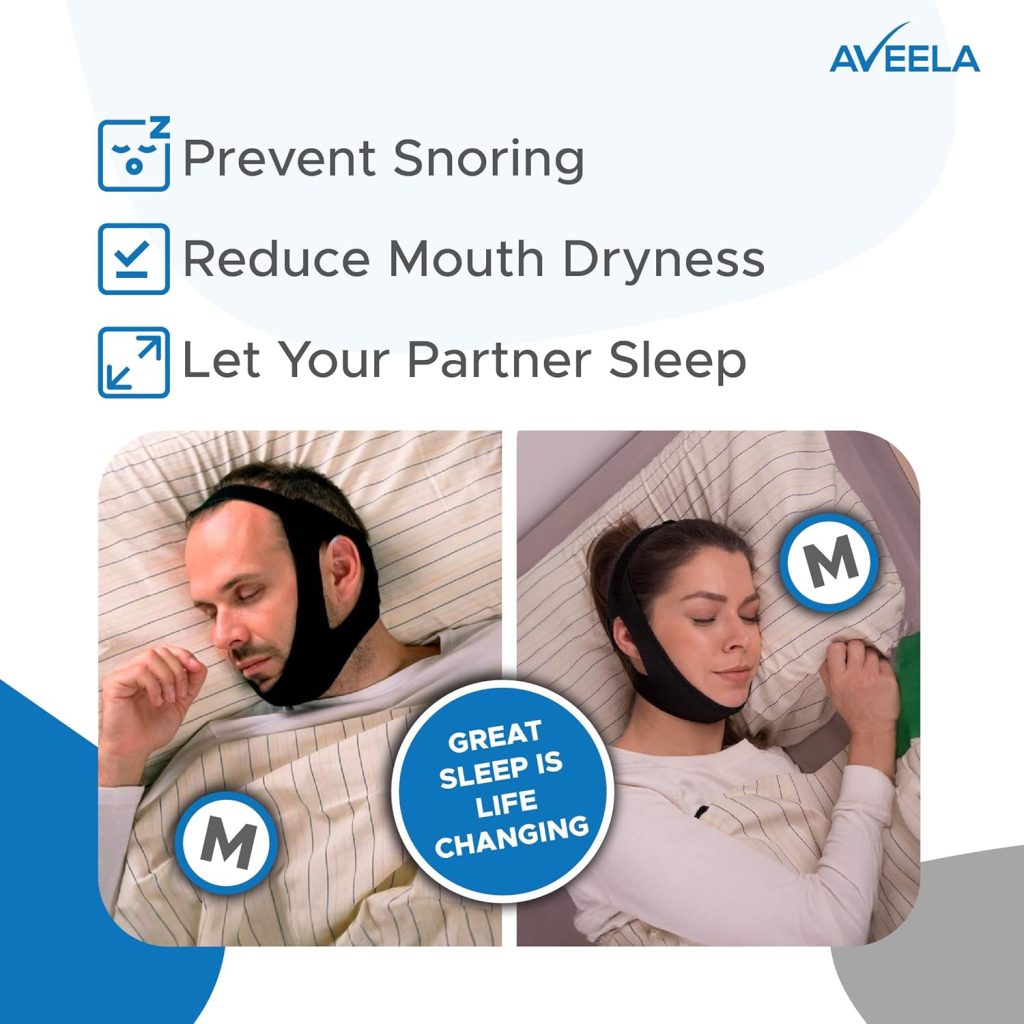
My Snoring Solution is an anti-snoring chinstrap, but its specific design is key. It is not a simple strap. It is engineered to hold the jaw in a “lightly elevated and slightly forward” position. This nuance is crucial. A poorly designed strap might simply clamp the mouth shut, which can be uncomfortable and ineffective. The intent here is to provide gentle support to the mandible, preventing it from dropping open and backward during sleep, thereby maintaining a patent airway.
3.2 Materials & Construction (2025 Update)
The product is constructed from a high-grade, medical-quality neoprene (approximately 1/8” thick). This material is chosen for its:
- Softness and Flexibility: Conforms to the unique shape of the jaw and face.
- Durability: Withstands nightly use and repeated washing.
- Breathability: Modern versions have improved micro-perforations or moisture-wicking liners to address the common complaint of sweating and heat buildup associated with earlier neoprene models.
- Hypoallergenic Properties: The materials are generally non-irritating, though those with severe latex sensitivities should always check the specific composition.
The strap features an adjustable, high-friction Velcro closure system at the crown of the head, allowing for a customizable and secure fit that shouldn’t slip off during the night.
3.3 How It Works: The Biomechanics
The mechanism is elegantly simple:
- Prevents Mouth Breathing: The primary function. By keeping the jaws together, it encourages or forces the user to breathe through their nose.
- Supports the Mandible: The gentle upward and forward support prevents the lower jaw from retracting during deep sleep. This retraction is a primary cause of tongue base collapse into the airway.
- Promotes Nasal Breathing: Nasal breathing is inherently better. The nose filters, warms, and humidifies air. More importantly, nasal breathing increases nitric oxide production, a molecule that improves oxygen uptake in the lungs and may positively influence sleep architecture.
3.4 Ideal User Profile: Who is This For?
My Snoring Solution is most likely to be effective for:
- The “Open-Mouth” Snorer: Someone whose snoring is unequivocally linked to their jaw dropping open.
- The Positional Snorer: Someone who primarily snores when on their back.
- Someone with Dental Work: As nothing goes in the mouth, it’s compatible with dentures, crowns, caps, and braces.
- Users Who Have Failed with Other Devices: Those who find MADs uncomfortable or CPAP claustrophobic.
- Individuals Seeking a Low-Cost, Non-Invasive First Step.
3.5 Contraindications: When to Avoid a Chinstrap
- Nasal Obstruction: If you have chronic severe nasal congestion from allergies, a deviated septum, or sinusitis, forcing your mouth closed can be dangerous and will severely disrupt your sleep as you struggle to breathe. Address nasal issues first.
- Suspected Sleep Apnea: As stated, this is not an OSA treatment. Using a chinstrap could potentially mask the symptoms of apnea without treating the underlying dangerous condition.
- Claustrophobia or Skin Sensitivities: Some users cannot tolerate anything on their face or may be sensitive to the materials.
- TMJ (Temporomandibular Joint) Disorders: While less stressful than a MAD, any pressure on the jaw could exacerbate TMJ pain in susceptible individuals.
The Balanced Review – Weighing the Pros and Cons for 2025
The Advantages (Pros):
- Non-Invasive and Simple: Its greatest strength. No molds to boil, no dentists to visit, no machinery. You put it on and go to sleep.
- Comfortable for Most: The soft neoprene is generally well-tolerated and less intrusive than intra-oral devices.
- Immediate Use: Truly “plug-and-play.” No adjustment period or fitting required beyond sizing the strap.
- Durability and Maintenance: Made of robust materials with no electronic parts to break. It is machine washable, promoting hygiene.
- Dental Work Friendly: A significant advantage over MADs for a large segment of the population.
- Money-Back Guarantee: The company offers a 90-day guarantee, allowing for a risk-free trial period (though note the fine print).
The Disadvantages (Cons & Considerations for 2025):
- Not a One-Size-Fits-All Solution: It only addresses one specific mechanism of snoring (open-mouth, jaw drop). It will be completely ineffective for snoring originating from other sources like the soft palate.
- Potential for Discomfort: Some users report:
- Pressure on the Jaw: A feeling of tightness or soreness in the morning.
- Sweating and Heat: Despite improvements, neoprene can still be warm.
- Strap Slippage: If not adjusted correctly, it can shift during the night or put pressure on the eyes/ears.
- Lack of Medical Endorsement: This is critical. As of 2025, My Snoring Solution is not FDA-cleared as a medical device for treating sleep apnea. It is sold as a wellness product. It is also not accredited by the Better Business Bureau (BBB), which may be a concern for some consumers regarding dispute resolution.
- The Refund Policy Fine Print: The promise of a “90-day money-back guarantee” is tempered by a 25% “environmental waste disposal fee” that is deducted from the refund. This is a significant and non-standard clause that customers must be aware of.
- Cost vs. Simplicity: While cheaper than a custom MAD or CPAP, some may argue that a simple neoprene strap is priced at a premium compared to its raw material cost.
The Verdict – Does It Really Work? A Data-Driven Conclusion
The question remains: does it work?
The answer is: Yes, for its intended user, it can be remarkably effective.
Evidence comes from two places:
- Biomechanical Plausibility: The theory is sound. Preventing the jaw from dropping open will stop mouth breathing and the snoring associated with it. It’s basic physics and anatomy.
- Aggregated User Testimonials (2025): Analyzing hundreds of modern reviews across independent platforms reveals a clear pattern:
- Success Stories: A large majority of satisfied users report a significant reduction or complete elimination of snoring. Common praises include “life-changing for our marriage,” “simple and effective,” and “I finally woke up feeling rested.”
- Failure Stories: The failures almost universally align with the contraindications: “I couldn’t breathe because my nose is always blocked,” “it didn’t stop my snoring,” (likely a palate snorer), or “it was too uncomfortable.”
The effectiveness is highly predicated on the correct match between the user’s snoring type and the device’s mechanism of action. It is not a magic bullet for all snoring, but for the open-mouth snorer, it is one of the most direct and logical solutions available.
The 2025 and Beyond Perspective – The Future of Sleep Tech
The landscape of snoring solutions is evolving rapidly. My Snoring Solution exists in a world of smart technology.
- The Rise of Sleep Trackers: Wearables like the Oura Ring, Whoop Strap, and Apple Watch now provide sophisticated data on sleep stages, blood oxygen levels (SpO2), and even detect snoring episodes. This data is invaluable. You can now objectively test a product like My Snoring Solution. Wear your tracker for a week without the strap to establish a baseline, then wear it for a week with the strap. Look for a reduction in snoring episodes and an improvement in deep sleep and SpO2 levels.
- Smart Chinstraps: The next generation of devices may incorporate sensors to monitor efficacy, providing users with direct feedback on their progress.
- Personalized Medicine: The future points towards solutions tailored to an individual’s specific anatomy and snoring phenotype, determined by AI analysis of sleep tracker data and even smartphone audio recordings.
My Snoring Solution represents the elegant, simple, and mechanical end of the spectrum. Its value endures precisely because of its simplicity and lack of complexity. It doesn’t need an app or a charger. It just works on a fundamental biomechanical principle.
The Final Recommendation & How to Proceed
My Snoring Solution is a highly recommended product for a specific subset of snorers. If you identify as an open-mouth snorer, have relatively clear nasal passages, and have no symptoms of sleep apnea, it is arguably one of the best first lines of defense.
Your Action Plan:
- Identify Your Snore Type: Have your partner observe you or use a voice recorder app on your phone to determine if you snore with your mouth open or closed.
- Rule Out Medical Issues: Be brutally honest about your daytime sleepiness. If you have any red flags for sleep apnea, consult a doctor.
- Address Nasal Congestion: If you have allergies or chronic stuffiness, try nasal strips, saline rinses, or allergy medication first.
- Try Lifestyle Changes: Weight loss and reduced alcohol consumption are the most effective long-term solutions for many.
- If You Proceed:
- Measure Carefully: Follow the company’s sizing guide precisely to ensure a comfortable fit.
- Manage Expectations: It may feel strange the first few nights. Give yourself a week to adjust.
- Use Technology: If you have a sleep tracker, use it to gather objective data on its effectiveness.
- Understand the Return Policy: Be aware of the 25% deduction should you need to return it.
Conclusion
The quest for a quiet night’s sleep is both personal and universal. My Snoring Solution is not a panacea, but it is a powerful, well-designed tool that hits its target with precision. For the millions of open-mouth snorers and their sleep-deprived partners, it represents a simple, comfortable, and effective path to reclaiming the silence of the night and the intimacy of the shared bedroom. In the complex ecosystem of sleep aids, its enduring popularity is a testament to the fact that sometimes, the most elegant solution is also the simplest.