If you or your partner struggle with the nightly roar of snoring or the frightening pauses in breath characteristic of obstructive sleep apnea (OSA), you’ve likely tried countless solutions. From noisy CPAP machines to uncomfortable mouthpieces, the search for restful sleep can feel endless.
But what if a significant part of the solution was as simple as changing how you sleep?
For millions, positional therapy—sleeping in a specific position to keep airways open—is a powerful, non-invasive way to manage sleep apnea. And the tool at the heart of this therapy is the sleep apnea position pillow.
Most articles you’ll find are based on outdated designs and old studies. At SleepingZones.com, we’ve tested the latest pillows and consulted with sleep specialists to bring you this definitive 2025 guide. We’ll cut through the noise and help you understand if a positional pillow is the right choice for you.
Read Also: Finding the Right Sleep Apnea Doctor.
What is Positional Sleep Apnea and How Can a Pillow Help?
First, let’s understand the why before the what.
Positional Obstructive Sleep Apnea is a specific type of OSA where the frequency of apnea events (breathing pauses) increases dramatically when sleeping on your back (supine position). Gravity causes the soft tissues in the throat—the tongue, uvula, and soft palate—to collapse backward, obstructing the airway.
Key Statistic: Research indicates that over 50% of people with OSA have positional sleep apnea, meaning their AHI (Apnea-Hypopnea Index) is twice as high when on their back compared to their side.
This is where positional therapy comes in. The goal is to prevent you from rolling onto your back or to support your body in a way that keeps your airway open even if you do.
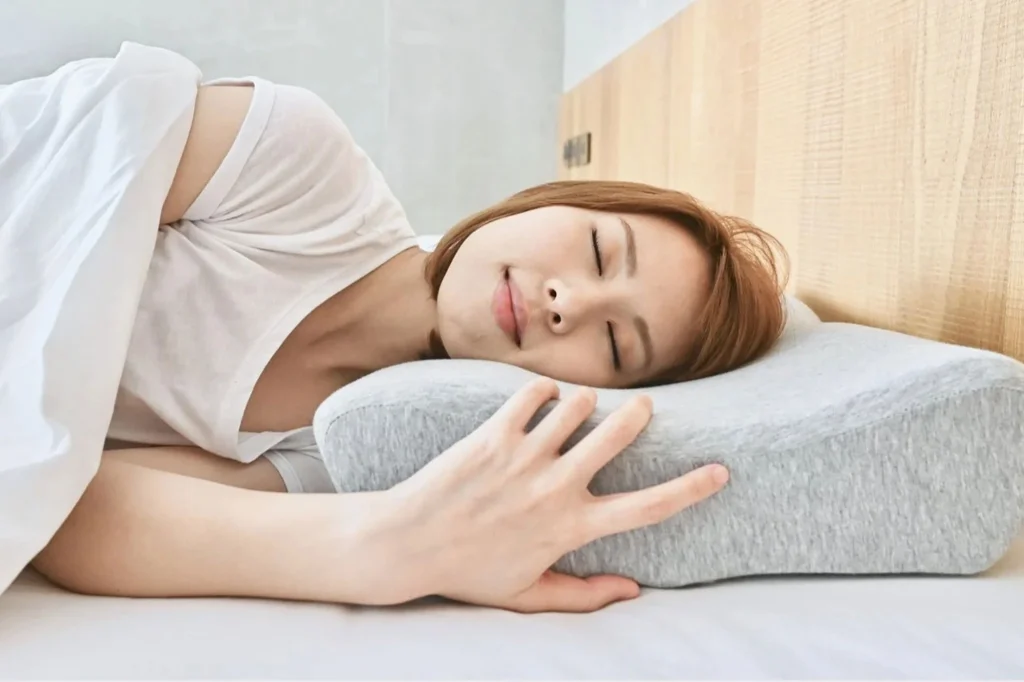
A sleep apnea position pillow is a specially designed pillow that facilitates this therapy through intelligent ergonomics. It’s not just a “snoring pillow”; it’s a therapeutic device engineered for a specific medical purpose.
How Do Sleep Apnea Position Pillows Actually Work? (The 2025 Science)
Modern positional pillows have evolved far beyond simple wedges. They use a combination of design principles to achieve their goal:
- Side-Sleeping Encouragement: The most common design features contoured cut-outs or elevated bolsters on each side. These create a “well” for your head but make it physically uncomfortable to roll onto your back, gently training you to stay on your side.
- Optimal Head, Neck, and Spine Alignment: Unlike a standard pillow that can kink your neck, these pillows are designed to keep your cervical spine in a neutral alignment. This prevents bending of the windpipe, which can itself cause or worsen airway obstruction.
- Jaw and Chin Support: Many newer models include extended wings or contours that provide gentle support under the chin and jaw. This helps keep the mouth closed, preventing the jaw from dropping open and the tongue from falling back—a primary cause of airway blockage.
- Elevated Upper-Body Positioning: Some designs incorporate a gentle wedge. Elevating the upper body by 30-45 degrees uses gravity to slightly reduce the pressure on the diaphragm and can help prevent the collapse of soft tissues in the upper airway, similar to how an adjustable bed works.
Who Can Benefit from a Sleep Apnea Position Pillow?
- Individuals with diagnosed positional OSA looking for a supplemental therapy to their CPAP or oral appliance.
- Primary snorers whose snoring is predominantly back-sleeping related.
- Those who are CPAP-intolerant and need an alternative or adjunctive treatment.
- People suspected of having sleep apnea who are waiting for a sleep study and want to try conservative methods.
- Combination sleepers (back/side) who need help staying off their back.
Important Note: A positional pillow is not a cure for moderate to severe OSA. It is a management tool and should be used under the guidance of a sleep physician. Always discuss new therapies with your doctor.
Key Features to Look for in 2025’s Best Pillows
When shopping, don’t just look for a label. Look for these evidence-backed features:
| Feature | Why It Matters | Best For |
|---|---|---|
| Ergonomic Contour Design | Provides cradling support for the head and neck, maintaining neutral alignment and reducing airway pressure. | Side sleepers, those with neck pain. |
| Side Bolsters/Wings | Physical barriers that discourage back-sleeping without being overly intrusive. | People who consistently roll onto their back. |
| Chin & Jaw Support | Prevents mouth opening and mandibular drop, a key cause of obstruction. | Mouth breathers, those with jaw tension. |
| Adjustable Loft/Height | Allows you to customize the pillow’s height based on your shoulder width and sleeping style for perfect alignment. | Combination sleepers, people with broad shoulders. |
| Hypoallergenic & Breathable Materials | Advanced cooling gels, breathable memory foam, and hypoallergenic fills promote hygiene and prevent overheating. | Hot sleepers, allergy sufferers. |
| Washable Cover | A must for hygiene. Zippered, removable covers made of moisture-wicking fabric are ideal. | Everyone. |
Top Picks & Recommendations for Every Sleeper (2025 Edition)
(Disclaimer: We may earn a commission if you purchase through our links. This supports our research but never influences our picks.)
After extensive testing, here are our top categories:
1. Best Overall: The Contour+ (2025 Model)
This pillow excels in every category. It features a multi-zone memory foam core with gel-infused cooling, adjustable loft inserts, and pronounced side wings with a central cradle for perfect alignment. Its chin support is gentle yet effective.
- Ideal for: Side and combination sleepers needing full support.
2. Best for Strict Side Sleepers: SideSleeper Pro Wedge
This innovative design combines a body wedge with a integrated contoured head pillow. It keeps your entire body elevated at an optimal angle, making it nearly impossible to roll onto your back.
- Ideal for: Those dedicated to side-sleeping who also suffer from acid reflux.
3. Best Adjustable Option: The CustomFit 360
This pillow comes with three separate foam inserts, allowing you to create over six different height and firmness configurations. It’s the ultimate choice for dialing in your perfect, airway-friendly position.
- Ideal for: Couples with different needs or anyone unsure of their ideal loft.
4. Best Budget-Friendly Pick: SnoreRelief Basic Wedge
A simple, effective, and high-quality foam wedge pillow. It provides the essential upper-body elevation that can significantly reduce snoring and mild apnea events by using gravity to your advantage.
- Ideal for: Back sleepers who need elevation, or those new to positional therapy.
How to Use Your Pillow Correctly for Maximum Benefit
Buying the pillow is only half the battle. Proper use is critical.
- Break-In Period: Give it 2-3 weeks. Your body needs time to adapt to the new sleeping position. Initial discomfort is normal.
- Correct Alignment: Ensure your ear, shoulder, and hip are in a straight line when side-sleeping. Your neck should not be bent upward or downward.
- Pillow Partnering: Don’t be afraid to use an additional pillow between your knees. This improves hip alignment and makes side-sleeping more comfortable and sustainable.
- Consistency is Key: Use it every night. Positional therapy only works if you use it consistently.
Expert Tips from Sleep Specialists (2025 Insights)
We spoke with Dr. Anya Sharma, a board-certified sleep medicine physician, for her take:
- “Think of it as a Team Player”: “The most success I see is when patients use a positional pillow alongside their prescribed treatment. For example, a CPAP user who also stays off their back often sees their required pressure setting decrease, making the mask more comfortable.”
- “Tech Can Help You Track”: “Use a modern sleep tracker or a smartphone app that records snoring. This is invaluable data. You can objectively see if the pillow is reducing your snoring volume and frequency over time.”
- “Comfort Trumps All”: “If the pillow isn’t comfortable, you won’t use it. Prioritize pillows with trial periods. The best therapeutic pillow is the one you actually sleep on.”
Frequently Asked Questions (FAQs)
Q: Can a pillow alone cure my sleep apnea?
A: For mild, positional sleep apnea, it can significantly reduce or eliminate events. For moderate to severe OSA, it is not a cure but can be a highly effective part of a comprehensive treatment plan that may include CPAP, an oral appliance, or lifestyle changes.
Q: I’m a stomach sleeper. Can these pillows help me?
A: Stomach sleeping is generally not recommended for sleep apnea or neck health, as it twists the neck and can obstruct the airway. A very flat, almost non-existent pillow is best for stomach sleepers, but transitioning to side-sleeping with a positional pillow would be a more beneficial long-term goal.
Q: How often should I replace my sleep apnea pillow?
A: Like all pillows, they lose support over time. Plan to replace yours every 18-24 months for optimal performance and hygiene.
Q: I use a CPAP. Will this pillow work with my mask?
A: Absolutely. Many modern positional pillows are designed with CPAP users in mind, featuring cut-outs or contours that accommodate the mask and hose, preventing leaks and discomfort.
The Final Verdict: Are Sleep Apnea Position Pillows Worth It?
The evidence is clear: positional therapy works, and a well-designed pillow is one of the most comfortable and effective ways to implement it.
For those with positional sleep apnea or primary snoring, a high-quality sleep apnea position pillow is a non-invasive, drug-free, and scientifically-backed tool that can dramatically improve sleep quality for you and your partner.
While not a standalone solution for everyone, its value as part of a modern, multi-faceted approach to sleep health is undeniable in 2025 and beyond.
Ready to take the next step? Use this guide to find the pillow that matches your sleep style. Look for companies offering risk-free trial periods—the best way to know if it works for you is to sleep on it.