Snoring is more than just a nighttime annoyance. It’s a problem that disrupts sleep, strains relationships, and in many cases, signals underlying health conditions like obstructive sleep apnea.
While there are countless remedies—ranging from mouthpieces and nasal strips to surgeries—changing your sleeping position is one of the simplest, most effective, and natural ways to stop snoring.
In this detailed guide, we’ll explore:
- The science behind why certain sleep positions worsen or reduce snoring.
- The best sleeping positions to stop snoring (with photo suggestions).
- Techniques to train your body to stay in the right position overnight.
- Special considerations for men, women, children, and older adults.
- Complementary strategies like weight management, throat exercises, and product recommendations.
By the end, you’ll have a clear, science-backed blueprint to quieter nights and better sleep.
Read Also:
The Ultimate Guide to Stopping Snoring.
How to Fall Asleep Fast for Kids: A Complete Parent’s Guide.
The Nectar Premier Mattress Review: Is This The Best Bed in a Box For You?
The Ultimate Guide to Sleep Gadgets for Athletes: Top Gifts for Recovery & Performance
Why Do People Snore? (The Science in Simple Words)
Snoring happens when airflow is obstructed in your airway during sleep. Instead of moving smoothly, air causes throat tissues, uvula, and soft palate to vibrate, producing sound.
Main Causes of Snoring:
- Back Sleeping (Supine Position) → Tongue and soft palate collapse backward.
- Nasal Blockage → Allergies, colds, or deviated septum force mouth breathing.
- Obstructive Sleep Apnea (OSA) → Airway collapses repeatedly, cutting off breathing.
- Excess Weight → Extra fat around neck and throat narrows airway.
- Aging → Muscle tone in throat weakens.
- Alcohol or Sedatives → Over-relax throat muscles.
- Poor Sleep Posture → Flat positions restrict airflow.
📸 Photo Suggestion: Side-by-side diagram showing an open airway vs. a partially collapsed airway in a snorer.
👉 Key Point: Sleep position is one of the easiest factors to control — making it a first step in snoring management.
The Best Sleeping Positions to Stop Snoring
Here are the positions backed by sleep experts and scientific studies that help reduce or stop snoring.
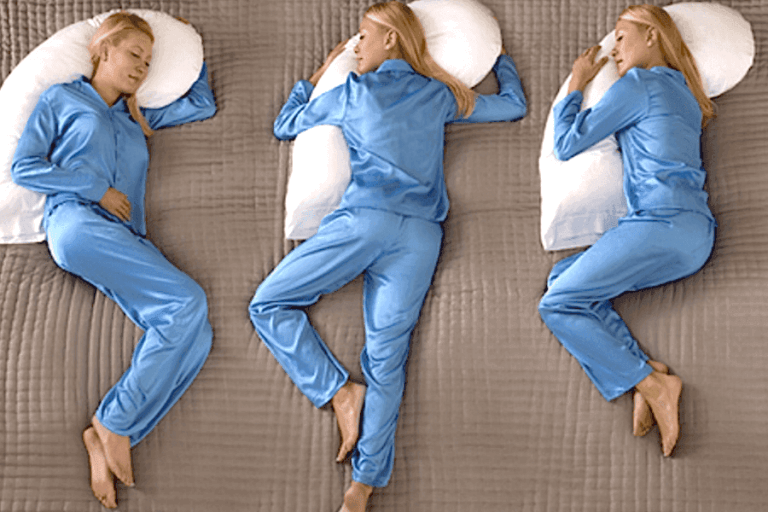
1. Side Sleeping (Right or Left Side)
Why it Works:
When you sleep on your side, gravity keeps your tongue and soft palate from falling back into the throat. This reduces airway obstruction and vibration.
📌 Scientific Backing: A 2022 study in Sleep Medicine Reviews found that positional therapy (training patients to sleep on their side) significantly reduced snoring intensity and frequency in people with mild-to-moderate OSA.
📸 Photo Suggestion: Person sleeping on their left side with a supportive pillow keeping the spine aligned.
Tips to Maintain Side Sleeping:
- Use a body pillow to prevent rolling over.
- Try the tennis ball trick: Sew a tennis ball into your pajama top’s back pocket.
- Invest in a side-sleeper pillow that supports the neck and keeps the airway open.
2. Left-Side Sleeping
While both sides help, the left side is particularly beneficial because:
- Reduces acid reflux (which worsens snoring).
- Improves circulation (especially important for pregnant women).
- Promotes better digestion overnight.
📸 Photo Suggestion: Pregnant woman comfortably sleeping on her left side with a maternity pillow.
3. Head-of-Bed Elevation (Elevated Sleeping)
Raising your head by 20–30 degrees reduces snoring by:
- Preventing airway collapse.
- Reducing nasal congestion.
- Supporting smoother airflow.
How to Elevate:
- Use a wedge pillow.
- Lift the head of your bed with blocks.
- Adjustable beds are the most effective option.
📸 Photo Suggestion: Person resting on a wedge pillow, with airway shown in diagram as more open.
4. Fetal Position
Curling into a gentle fetal position can reduce snoring, especially for people with mild OSA.
⚠️ Avoid curling too tightly as it restricts deep breathing.
📸 Photo Suggestion: Illustration of a person in a relaxed fetal position.
5. Stomach Sleeping (Prone Position)
Why it Helps:
Lying on your stomach prevents the tongue and soft palate from collapsing backward.
Downside:
- May strain your spine and neck.
- Can cause morning stiffness.
👉 Best used occasionally or with an ergonomic stomach sleeper pillow.
📸 Photo Suggestion: Man sleeping on stomach with a thin pillow to prevent neck strain.
The Worst Sleeping Positions for Snoring
❌ Flat Back Sleeping (Supine Position)
- Most common trigger for snoring.
- Increases risk of airway collapse.
- Worsens sleep apnea symptoms.
📸 Photo Suggestion: Back sleeper with highlighted collapsed airway.
❌ Flat Sleeping with No Pillow
- Head tilts backward unnaturally.
- Airway collapses more easily.
- Snoring gets louder.
How to Train Yourself Into Snore-Free Sleeping Positions
Changing sleep posture is challenging, but here are effective methods:
- Positional Therapy Devices – belts, vests, or sensors that prevent back sleeping.
- Body Pillows – encourage side sleeping.
- Wedge Pillows – keep head elevated.
- Smart Sleep Devices – apps and wearables track your posture and snoring.
- DIY Methods – tennis ball trick, extra cushions.
📸 Photo Suggestion: A positional therapy device worn around the chest.
Lifestyle Changes That Boost Results
- Weight Loss → Losing just 10–15 pounds can drastically reduce snoring.
- Avoid Alcohol & Sedatives → Especially 2–3 hours before bedtime.
- Nasal Treatments → Decongestants, saline sprays, or nasal strips.
- Hydration → Prevents thick mucus buildup.
- Throat Exercises → Strengthen airway muscles.
📸 Photo Suggestion: Diagram of throat and tongue strengthening exercises.
Case Studies & Real Experiences
📌 Case 1: John, 42 – Snored loudly for years. Switched to side sleeping with a body pillow and reduced his snoring by 70%.
📌 Case 2: Mary, 36 (Pregnant) – Severe snoring during second trimester. Adjusted to left-side sleeping with a wedge pillow, improved her sleep and her partner’s.
📌 Case 3: Alex, 55 – Tried multiple mouthpieces with no success. Finally invested in an adjustable bed. His snoring reduced enough that his doctor ruled out CPAP therapy.
Buying Guide: Best Products to Support Anti-Snoring Sleeping Positions
✅ Pillows
- Wedge Pillows → Best for head elevation.
- Body Pillows → Prevent rolling onto back.
- Specialty Anti-Snore Pillows → Designed to align airway.
✅ Beds
- Adjustable Beds → Ideal for customizing sleep posture.
- Mattresses for Side Sleepers → Keep spine aligned.
✅ Devices
- Positional Belts → Prevent rolling to back.
- Smart Snore Monitors → Track and correct posture.
📸 Photo Suggestion: Comparison photo of anti-snore pillows.
Special Considerations
For Men
- Men snore more often due to larger neck size.
- Side sleeping with head elevation is best.
For Women
- Hormonal changes during pregnancy increase snoring risk.
- Left-side sleeping recommended.
For Children
- Snoring can indicate enlarged tonsils or adenoids.
- Always consult a pediatrician.
For Seniors
- Muscle tone weakens with age.
- Combination of side sleeping + throat exercises helps.
FAQs
Q: Which sleeping position is the absolute best for stopping snoring?
A: Left-side sleeping with slight head elevation.
Q: Can pillows alone stop snoring?
A: They help, but lifestyle and medical checks are also important.
Q: Does stomach sleeping permanently fix snoring?
A: It helps, but not recommended long-term due to spinal strain.
Q: What if nothing works?
A: Consult a sleep doctor. It may be sleep apnea, which requires medical treatment.
Conclusion
Snoring doesn’t just affect you — it impacts your partner, your productivity, and your long-term health. Fortunately, adjusting your sleeping position is one of the easiest and most effective ways to control snoring.
Best Positions to Stop Snoring:
- ✅ Side sleeping (especially left side).
- ✅ Slight head elevation.
- ✅ Relaxed fetal position.
Combined with healthy lifestyle choices, throat exercises, and positional aids, you can reduce snoring dramatically without expensive treatments.