Waking up groggy after a “full night’s sleep” is one of the most frustrating things. You think you’ve done everything right — you got your 7–8 hours in, avoided pulling an all-nighter, and yet your body feels heavy, your brain foggy, and your energy flat. So, what gives? Why does this happen, and more importantly, how can you fix it?
Let’s break it down.
The Myth of “Just Get 8 Hours”
We’ve all heard the advice: “Adults need 7–9 hours of sleep every night.” And while that’s true on average, there’s more to sleep than just a number of hours.
What most people don’t realize is that sleep isn’t one long, uniform state. It’s a cycle of stages — light sleep, deep sleep, and REM — repeated every 90 minutes or so. Where you wake up in that cycle matters just as much as how many hours you slept.
This explains why sometimes 6.5 hours feels better than 8. If you wake up during deep sleep, your brain is essentially yanked out of “maintenance mode,” leaving you with the dreaded sleep inertia (aka morning grogginess).
Why You Still Feel Tired After Sleeping Enough
Here are the most common culprits:
1. Waking Up Mid-Cycle
Your alarm doesn’t care if you’re in REM or deep sleep. If it goes off at the wrong time, you wake up disoriented and sluggish.
2. Poor Sleep Quality
Quantity isn’t the same as quality. Things like stress, caffeine, alcohol, or even scrolling your phone in bed can prevent your body from entering restorative deep sleep stages.
3. Inconsistent Sleep Schedule
Your circadian rhythm thrives on consistency. Sleeping 10 hours on weekends and 6 on weekdays confuses your internal clock and leaves you perpetually “jet-lagged.”
4. Hidden Sleep Disorders
Conditions like sleep apnea, restless legs, or even undiagnosed anxiety can disrupt your sleep architecture without you realizing it.
Practical Fixes to Wake Up Refreshed
The good news? You can actually outsmart a lot of these issues with simple lifestyle tweaks:
✅ 1. Time Your Sleep
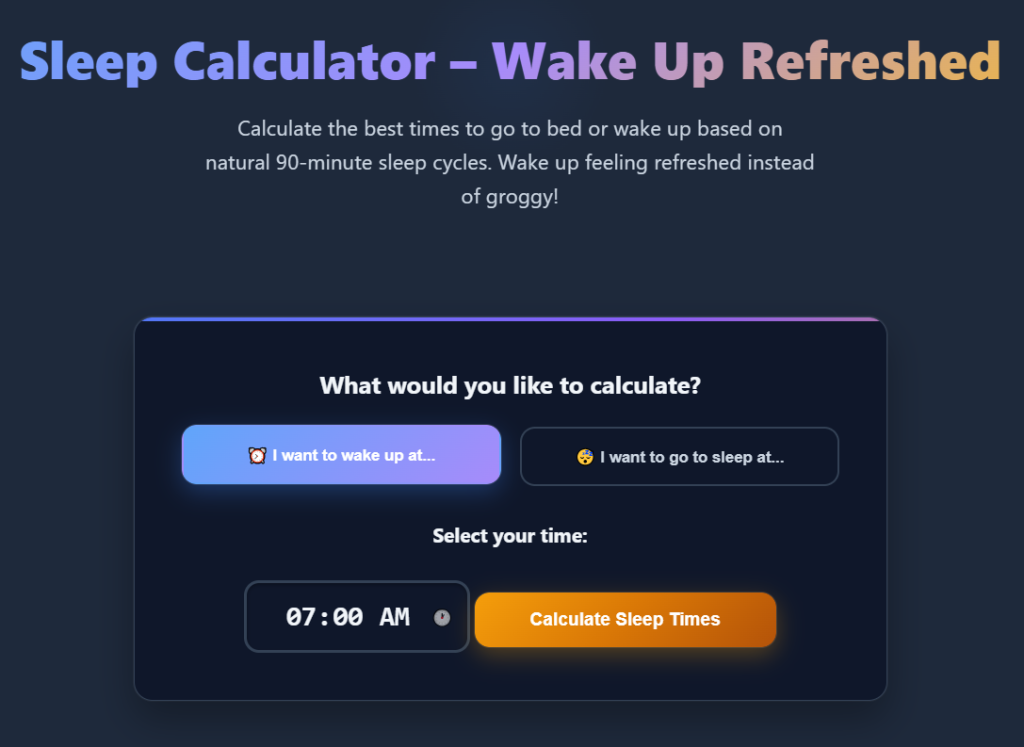
Instead of just aiming for “8 hours,” think in terms of 90-minute cycles. Waking up at the end of a cycle leaves you much more refreshed than waking up mid-cycle. Tools like SleepyClock make this super simple by calculating ideal bed/wake times for you.
✅ 2. Prioritize Sleep Quality
- Keep your room cool (60–67°F / 16–19°C is ideal).
- Block out light (blackout curtains or a sleep mask).
- Limit alcohol and caffeine, especially late in the day.
- Put down screens 30–60 minutes before bed — blue light tricks your brain into thinking it’s still daytime.
✅ 3. Stick to a Consistent Routine
Your body loves predictability. Try to go to bed and wake up at the same time every day, even on weekends.
✅ 4. Watch for Red Flags
If you’re constantly exhausted despite solid sleep hygiene, it might be worth checking for underlying sleep disorders with a doctor.
Final Thoughts
Waking up tired isn’t always about “not enough hours.” It’s often about when and how you sleep. By paying attention to sleep cycles, improving your sleep environment, and staying consistent with your schedule, you can transform mornings from groggy to energized.
And if you want a simple way to experiment with cycle-based sleep, give SleepyClock a try — it takes the guesswork out of timing your rest so you can wake up feeling sharper.