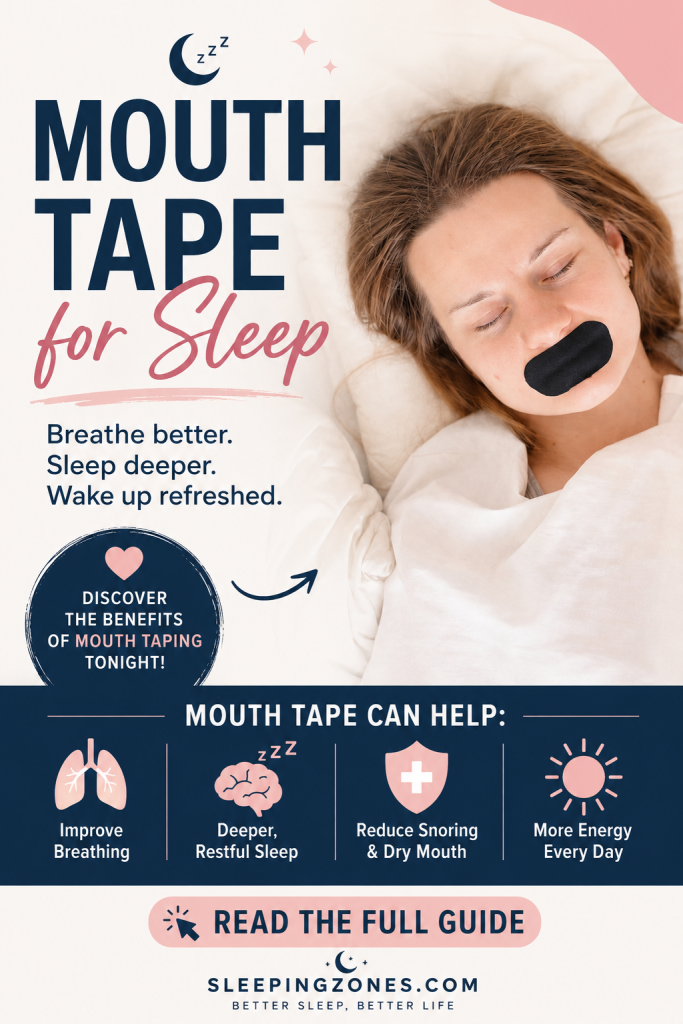

Scroll through TikTok or Instagram lately and you’ve probably seen someone confidently smoothing a small strip of tape over their lips before bed. Mouth taping has exploded from a fringe biohacker habit into one of the most searched sleep trends of the year, with tens of thousands of people searching for it every month — and for good reason. The premise is almost suspiciously simple: a soft, skin-safe strip keeps your lips gently closed overnight, forcing you to breathe through your nose instead of your mouth.
The big question is whether it actually works, or whether it’s just the latest wellness trend riding a wave of viral testimonials. We dug into the research, compared the top-selling brands, and broke down exactly who should (and shouldn’t) try it.
What Is Mouth Taping, Exactly?
Mouth taping is the practice of placing a small adhesive strip over your closed lips before sleep to prevent mouth breathing. The goal is to redirect your breathing through your nose, which warms, filters, and humidifies the air before it reaches your lungs — something mouth breathing skips entirely.
It sounds almost too simple to matter, but the mechanism behind it is fairly intuitive. When your mouth falls open during sleep, your lower jaw tends to drop back, and the muscles at the back of your throat relax further, narrowing your airway. That’s a big part of why so many people snore worse, or breathe more loudly, when sleeping with their mouth open. Keeping the lips gently sealed helps keep that airway more open and stable.
Does It Actually Work? What the Research Says
This is where it pays to separate the viral hype from what’s actually been studied. Mouth taping is still a relatively new area of research, and most of the more dramatic claims circulating online — clearer skin, a more “defined” jawline, better digestion — simply aren’t backed by science yet.
What does have some support: a handful of small studies suggest mouth taping may help reduce snoring and mild obstructive sleep apnea symptoms, particularly in people who sleep on their backs. The logic tracks with what sleep specialists already know about positional and mouth-breathing-related snoring — closing off the mouth-breathing pathway encourages the body to default to nasal breathing, which tends to keep the airway more open.
It’s worth being clear-eyed about the limits here, though. Mouth tape is not a treatment for moderate or severe obstructive sleep apnea, and used incorrectly in that situation, it could actually be risky. If you’ve been told you have sleep apnea, or you suspect you might (loud snoring, gasping, daytime exhaustion), this is a “talk to your doctor first” situation, not a “throw a strip on and hope” one.
Read Also:
Magnesium Glycinate for Sleep: Why Most People Are Taking the Wrong Dose (And What Actually Works)↗
Best Bed Cooling Systems of 2026: Which One Actually Fits Your Budget and Your Bedroom?↗
SnoreCoach Review 2026: Does This $98 Wearable Actually Stop Snoring?↗
Who Mouth Tape Is a Good Fit For
Mouth taping tends to work best, and feel safest, for people who:
- Already breathe fine through their nose during the day
- Notice they wake up with a dry mouth or sore throat
- Snore mildly, especially when sleeping on their back
- Use a CPAP machine and struggle with air leaking out through the mouth
- Want a low-cost, non-invasive way to test whether nasal breathing improves their sleep
Who Should Skip It
This part matters, so don’t skip it. You generally shouldn’t use mouth tape if any of the following apply to you:
- You have trouble breathing through your nose due to allergies, a cold, a deviated septum, or sinus issues
- You have diagnosed or suspected moderate-to-severe sleep apnea
- You’ve had alcohol or sedatives before bed
- You drool heavily in your sleep
- You have sensitive or broken skin around your lips
- You feel claustrophobic easily
- You’re a child, or you’re unable to remove the tape on your own if needed
If any of those apply, it’s worth talking to a doctor before trying it, or skipping it in favor of a different solution like nasal strips or positional therapy.
What to Look for in a Mouth Tape
Not all mouth tapes are created equal, and the differences actually matter for comfort and whether you’ll stick with it past night one.
Adhesive quality. You want something that holds for a full eight hours but doesn’t tear up your skin on removal. Cheap medical tape often fails on one end or the other — either it falls off by 2 a.m., or it leaves your lips red and irritated.
Ventilation. Many of the better designs include a small center vent or gap, so you can still breathe through your mouth in an emergency, or talk if you need to. This also just makes the whole experience feel less claustrophobic.
Facial hair compatibility. If you have a beard or mustache, this narrows your options fast — some tapes simply won’t stick.
Size and shape. Full-coverage rectangular strips offer the most security; smaller or H-shaped designs feel less intense but may not stay put for active sleepers.
The Best Mouth Tape Brands, Compared
After comparing the most-tested products on the market, one brand consistently comes out on top for overall quality, with a couple of strong alternatives depending on your priorities.
| Brand | Best For | Price | Standout Feature |
|---|---|---|---|
| SomniFix Mouth Strips | Best overall | ~$25 | Transparent, low-profile design with a center breathing vent; gentle gel adhesive |
| ZzzTape | Best value | ~$50 | Comes in two sizes/colors; beard-friendly adhesive |
| VIO2 Unscented | Sensitive skin | ~$57 | “H” shape allows horizontal or vertical wear; minimal skin contact |
| Loftie Mouth Tape | Beginners | ~$30 | Grab tabs for easy removal, plus an emergency breathing hole |
Why SomniFix Comes Out on Top
Across independent testing, SomniFix Mouth Strips repeatedly rank as the best overall option, and it’s easy to see why once you compare the details. The ergonomic, lip-shaped design conforms naturally to your mouth rather than sitting as a flat rectangle, and the center mesh vent means you’re never fully sealed off — a small detail that makes a big psychological difference for first-time users worried about feeling trapped.
The adhesive is hypoallergenic, latex-free, and designed to be gentle enough for nightly use without the redness and flaking that cheaper alternatives can cause after a week or two of use. It’s also one of the few options that reportedly works well even for people with facial hair, which immediately rules out a lot of the competition.
SomniFix also backs the product with a 30-night trial period, which takes most of the risk out of testing it for yourself — a meaningful detail in a category where “does this work for my face and sleep style” is genuinely hard to predict from a review alone.
How to Try Mouth Taping Safely (First-Timer’s Checklist)
If you’ve decided to give it a shot, a little prep goes a long way toward making night one comfortable instead of alarming:
- Test it during the day first. Wear it for 20–30 minutes while you’re awake and active, so you know what it feels like and that you can breathe comfortably through your nose.
- Make sure your nose is clear. If you’re congested from allergies or a cold, wait until that clears up before taping.
- Choose a vented design for your first try. It’s a much easier mental adjustment than a full, solid seal.
- Apply to clean, dry skin. Lotion, oil, or leftover skincare products will stop the adhesive from holding properly.
- Keep the tape low-cost and low-commitment at first. Try a starter pack before committing to a bulk subscription, in case your skin or sleep style doesn’t get along with it.
The Bottom Line
Mouth taping isn’t magic, and you should tune out the more outlandish claims about jawlines and clear skin floating around social media. But for the specific problem it’s actually built to solve — mild snoring, dry-mouth wakeups, and CPAP mask leaks tied to mouth breathing — the early research and the sheer volume of consistent user reports make a reasonable case that it’s worth trying, especially given how cheap and low-risk it is compared to other anti-snoring solutions.
If you’re going to try it, skip the random roll of medical tape from your bathroom cabinet. A purpose-built strip like SomniFix is designed specifically for all-night wear on facial skin, with the adhesive strength and ventilation dialed in for comfort — and the 30-night trial means you can find out if it works for you with very little downside.
Always check with a doctor before starting mouth taping if you have any underlying breathing, heart, or sleep conditions — especially suspected sleep apnea.