Waking up tired after what seems like a full night of sleep is frustrating and confusing. You go to bed early, clock in the recommended 7–9 hours, and yet—when morning comes—you’re dragging yourself out of bed, groggy, unfocused, and far from refreshed.
So, why does this happen? Why do some people always feel tired no matter how much sleep they get? And what can you do to finally wake up energized instead of exhausted?
In this guide, we’ll break down the science behind sleep inertia, poor sleep quality, and sleep cycles. We’ll explore common causes of unrefreshing sleep, what it means if you wake up with brain fog, and proven strategies on how to stop waking up tired once and for all.
Table of Contents
- The Science of Sleep: Why Rest Doesn’t Always Equal Refreshment
- What Is Sleep Inertia and Why It Matters
- Common Causes of Waking Up Tired
- Poor Sleep Quality
- Sleep Disorders
- Stress and Anxiety
- Poor Sleep Hygiene
- Oversleeping and Sleep Cycles
- Why Do I Feel More Tired When I Sleep More?
- Always Tired No Matter How Much Sleep: Medical Considerations
- How to Stop Waking Up Tired: Practical Solutions
- Optimizing Your Sleep Environment
- Sleep Schedule and Sleep Cycles
- Nutrition and Hydration
- Stress Management
- Sleep Tools and Technology
- When to Seek Professional Help
- Final Thoughts
📌 Featured
You may wake up tired due to poor sleep quality, disrupted sleep cycles, sleep inertia, stress, or underlying medical conditions like sleep apnea or thyroid problems. Optimizing your sleep schedule, environment, and health can help you wake up refreshed.
1. The Science of Sleep: Why Rest Doesn’t Always Equal Refreshment
Most people assume that if they spend enough hours in bed, they’ll wake up feeling refreshed. But sleep quality is just as important as sleep quantity.
Sleep happens in cycles, and each cycle lasts about 90 minutes. These cycles are divided into different stages:
- Stage 1: Light sleep (transition into sleep).
- Stage 2: Deeper light sleep where your body relaxes.
- Stage 3 (Slow-Wave Sleep): Deep, restorative sleep crucial for physical repair.
- REM Sleep: Dreaming stage, important for memory and emotional regulation.
If your sleep is fragmented (broken up), or you wake up in the wrong stage of sleep, your body doesn’t complete these cycles properly. That’s why you may feel groggy even after a “full night” in bed.
<a name=”inertia”></a>
2. What Is Sleep Inertia and Why It Matters
Ever woken up and felt like your brain was stuck in a foggy haze? That’s sleep inertia—the transitional state between sleep and wakefulness.
Sleep inertia typically lasts 15–30 minutes but can extend for hours if you:
- Wake up during deep sleep rather than light sleep.
- Oversleep, causing disrupted sleep cycles.
- Have poor sleep quality due to stress, alcohol, or environment.
This is why people often wake up with brain fog, unable to think clearly or get going quickly, even if they technically had “enough” sleep.
<a name=”causes”></a>
3. Common Causes of Waking Up Tired
There are several reasons why you may feel exhausted after sleep. Let’s break them down:
3.1 Poor Sleep Quality
Even if you spend 8 hours in bed, tossing and turning, frequent awakenings, or environmental disruptions (noise, light, temperature) reduce sleep quality.
Signs of poor sleep quality include:
- Waking up frequently at night.
- Not feeling rested despite sleeping long enough.
- Snoring or gasping during sleep.
3.2 Sleep Disorders
Some people suffer from conditions that disrupt sleep cycles without them realizing it:
- Sleep apnea: Breathing interruptions prevent deep sleep.
- Insomnia: Difficulty falling or staying asleep.
- Restless legs syndrome: Uncontrollable leg movements.
- Narcolepsy: Poor regulation of sleep-wake cycles.
3.3 Stress and Anxiety
Mental health directly affects sleep. Stress keeps the brain in alert mode, preventing restorative deep and REM sleep.
3.4 Poor Sleep Hygiene
Your habits and environment matter:
- Blue light exposure from phones before bed.
- Inconsistent sleep schedule.
- Caffeine or alcohol too close to bedtime.
3.5 Oversleeping and Sleep Cycles
Ironically, sleeping too much can make you feel worse. Oversleeping disrupts circadian rhythms, increases grogginess, and may even be linked to depression.
<a name=”oversleeping”></a>
4. Why Do I Feel More Tired When I Sleep More?
It seems counterintuitive, but sleeping longer can leave you more exhausted. Here’s why:
- Interrupted sleep cycles: If you oversleep, you may wake up in deep sleep instead of light sleep.
- Circadian rhythm disruption: Sleeping past your natural wake time confuses your internal clock.
- Underlying health issues: Chronic fatigue, thyroid disorders, or depression can increase the need for sleep but reduce restfulness.
If you often wonder “Why do I feel worse when I sleep more?”—this could be the reason.
<a name=”medical”></a>
5. Always Tired No Matter How Much Sleep: Medical Considerations
If you’re always tired despite getting 7–9 hours, it may be a sign of underlying health issues:
- Thyroid problems (hypothyroidism)
- Chronic fatigue syndrome
- Anemia
- Depression
- Diabetes or blood sugar imbalances
- Vitamin D or B12 deficiency
In these cases, no amount of “better sleep hygiene” will fully fix the problem until the underlying condition is treated.
<a name=”solutions”></a>
6. How to Stop Waking Up Tired: Practical Solutions
The good news is, most cases of morning tiredness are fixable with lifestyle changes. Here’s how to improve your sleep and wake up energized:
6.1 Optimize Your Sleep Environment
- Keep your room cool, dark, and quiet.
- Invest in a supportive mattress and pillow.
- Use blackout curtains and white noise machines if needed.
6.2 Follow a Consistent Sleep Schedule
- Go to bed and wake up at the same time daily.
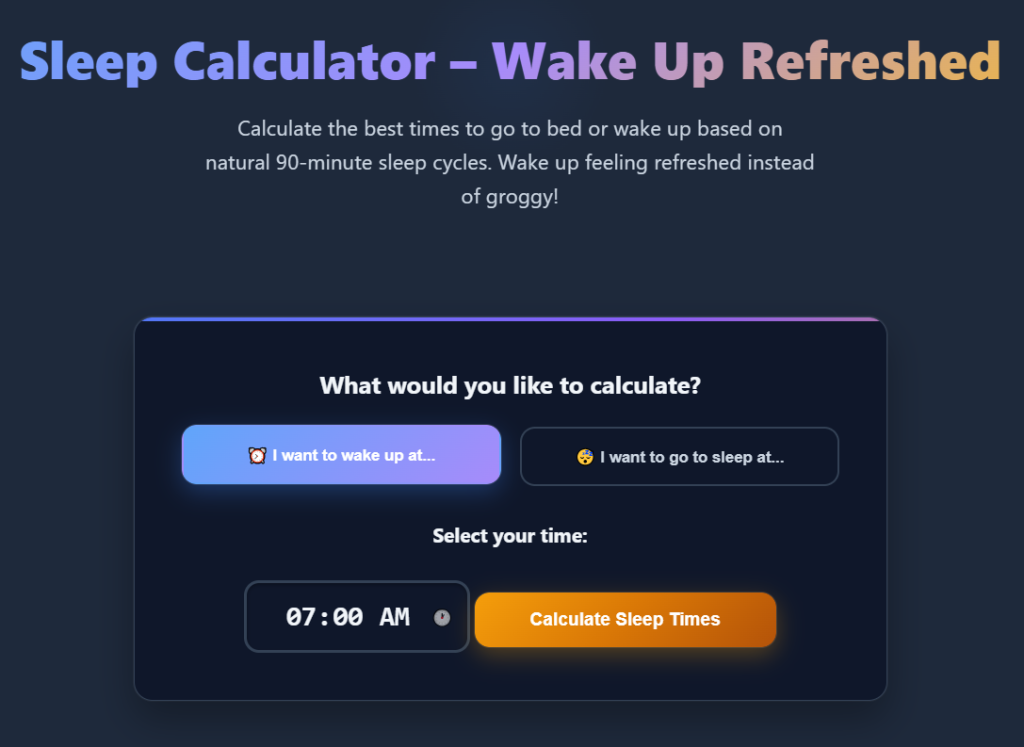
- Use a sleep calculator to align with 90-minute cycles.
- Avoid sleeping in excessively on weekends.
6.3 Nutrition and Hydration
- Limit caffeine after 2 PM.
- Stay hydrated (dehydration increases fatigue).
- Eat a balanced dinner; avoid heavy late-night meals.
6.4 Stress Management
- Try relaxation techniques before bed: meditation, journaling, or the 4-7-8 breathing method.
- Create a wind-down routine (no screens an hour before bed).
6.5 Sleep Tools and Technology
- Use smart alarms that wake you during light sleep phases.
- Track your sleep with apps or wearables.
- Consider a dawn-simulating alarm clock for a natural wake-up.
<a name=”help”></a>
7. When to Seek Professional Help
If lifestyle adjustments don’t help and you’re still waking up tired every day, see a doctor or sleep specialist. They can check for:
- Sleep apnea or other sleep disorders.
- Mental health conditions like anxiety or depression.
- Hormonal or metabolic imbalances.
<a name=”conclusion”></a>
8. Final Thoughts
Feeling tired after sleep is not just about the number of hours you spend in bed—it’s about sleep cycles, sleep quality, and overall health.
If you’ve ever asked yourself:
- “Why am I always tired no matter how much sleep I get?”
- “Why do I feel more tired when I sleep more?”
- “How do I stop waking up tired every day?”
The answer lies in understanding your sleep patterns, managing stress, improving your sleep environment, and addressing any underlying health issues.
By making small but impactful changes, you can break the cycle of groggy mornings and finally wake up refreshed, clear-headed, and ready to take on the day.
✅ Key Takeaway: Waking up tired is not normal. Whether it’s sleep inertia, poor sleep quality, oversleeping, or medical issues, identifying the cause is the first step toward fixing it. With the right strategies, you can stop asking “Why do I wake up tired?” and start enjoying truly restorative sleep.