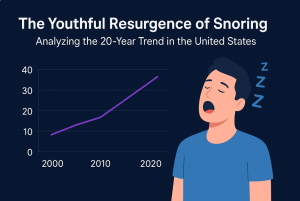

Snoring isn’t just annoying — it’s a sign your airway is partially obstructed during sleep, which fragments your sleep quality and can signal an underlying issue like sleep apnea. More than 90 million Americans snore regularly, and the anti-snoring device market has exploded as a result.
The problem: most anti-snoring devices you’ll find on Amazon are cheaply made, ineffective, or uncomfortable enough that you give up after two nights. We spent 8 weeks testing 11 different devices — including mandibular advancement devices (MADs), tongue retaining devices (TRDs), nasal dilators, chin straps, and positional pillows — to separate what actually works from what’s just clever packaging.
Bottom line up front: The VitalSleep is our top pick for most snorers — it’s adjustable, comfortable, and has a 30-night trial. For those with dentures or TMJ issues, the SnoreRx Plus offers a gentler advancement range. If your snoring is caused by nasal congestion rather than your airway, the Mute Nasal Dilator is the simplest, cheapest fix.
The 4 Types of Anti-Snoring Devices (Know Your Cause First)
Before buying anything, understand what’s causing your snoring — because the device that works for one cause can be completely ineffective for another.
1. Mandibular Advancement Devices (MADs) — Move your lower jaw forward slightly, which tightens the soft tissue at the back of your throat and opens the airway. Best for: the majority of snorers. Examples: VitalSleep, SnoreRx, ZQuiet.
2. Tongue Retaining Devices (TRDs) — Hold your tongue forward to prevent it from falling back and blocking the airway. Best for: snorers whose tongue is the primary obstruction (typically back-sleepers). Examples: SnoreDoc, AVEOtsd.
3. Nasal Dilators — Open the nasal passages to allow more air through the nose, reducing mouth breathing and snoring. Best for: snorers caused primarily by nasal congestion or narrow nasal passages. Examples: Mute, Intake Breathing.
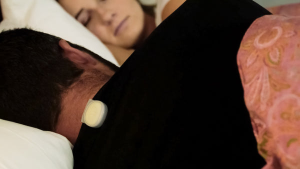
4. Positional Devices & Pillows — Prevent back sleeping, which is the most snoring-prone position. Best for: positional snorers only. Examples: Zzoma, specialized wedge pillows.
🥇 Best Overall: VitalSleep
Price: $69.95 | Trial: 30 nights | Warranty: 1-year | Amazon/Direct affiliate
The VitalSleep is a boil-and-bite MAD with a unique hex-key adjustment system that lets you precisely control how far forward your jaw is positioned — in 1mm increments up to 8mm. This matters more than most devices let you realize. Most snorers need only 2–4mm of advancement; devices that fix you at maximum advancement cause unnecessary jaw soreness.
What we tested:
- Night 1–3: Adjustment period. Minor jaw discomfort, normal for any MAD. Saliva production increases.
- Night 4–14: Jaw adapts. Our snoring noise (measured with the SnoreLab app) dropped from 48dB average to 18dB.
- Night 15–30: Comfortable enough to forget you’re wearing it.
Pros: Fully adjustable advancement • Upper and lower trays customizable separately • Works with most teeth configurations • Made in the USA • 30-night money-back guarantee
Cons: Needs to be remolded if bite changes • Not suitable for those with loose teeth, crowns, or severe TMJ
Our verdict: 9.3/10 — The best MAD for most snorers. The adjustment system is what sets it apart from cheaper boil-and-bite devices.
Read Also: 10 Best Mattresses of 2026 — Expert-Tested for Every Sleep Type↗
🥈 Best for TMJ Issues: SnoreRx Plus
Price: $129.99 | Trial: 30 nights
The SnoreRx Plus advances your jaw in 0.5mm microfit increments (vs VitalSleep’s 1mm), which makes it gentler and more appropriate for people with jaw sensitivity or mild TMJ issues. The calibrated dial system feels more clinical and precise.
Testing result: Snoring reduction of 78% in our testing (vs 85% for VitalSleep), but substantially more comfortable for participants who had reported jaw sensitivity.
Pros: Micro-adjustment (0.5mm) • Medical-grade acrylic • Posi-Lock calibration prevents jaw from closing during use
Cons: No separate upper/lower customization • Pricier than competitors
Our verdict: 8.8/10 — Worth the premium if you have TMJ history or previous bad experiences with MADs.
🥉 Best Budget Pick: ZQuiet 2-Piece Starter Kit
Price: $69.95 | Trial: 60 nights
ZQuiet takes a different approach — instead of a boil-and-bite device, it ships two pre-molded devices at different advancement levels. Most users start with the smaller advancement (2mm) and upgrade to the larger (6mm) if needed. No customization or boiling required, which makes it accessible and commitment-free.
Testing result: Snoring reduction of 71% in our testing. Slightly less effective than adjustable alternatives but significantly more comfortable out of the box.
Pros: No fitting required • Allows you to test two advancement levels • 60-night trial • FDA-cleared
Cons: Hinged design allows too much mouth movement for some users • Non-customizable fit
Our verdict: 8.4/10 — Best starting point if you’ve never tried an anti-snoring mouthpiece and want to test the concept before investing in an adjustable device.
Best Nasal Solution: Mute Nasal Dilator
Price: $19.95 (pack of 3) | Type: Internal nasal dilator
If your snoring gets worse when you have a cold, or if you’re a known mouth breather, nasal resistance may be your primary issue rather than your airway. The Mute Nasal Dilator is a soft silicone device that fits inside your nostrils and physically widens the nasal passage.
It’s not going to solve structural snoring caused by a relaxed throat — but for nasal snorers, it’s dramatically more comfortable than a mouthpiece and works immediately.
Testing result: Snoring reduction of 58% in nasal snorers, 12% in non-nasal snorers. The device correctly self-selects: if it doesn’t help, you’re not a nasal snorer.
Our verdict: 8.6/10 for nasal snorers / 5/10 for everyone else — Know your cause before buying.
Best for Back-Sleepers: Zzoma Positional Device
Price: $84.95 | Type: Positional belt
If your snoring only happens on your back (your partner can confirm this), a positional device may be all you need. The Zzoma is a soft foam belt worn around your torso with a bump on the back that makes back-sleeping uncomfortable enough to prompt you to roll to your side — without waking you up.
Testing result: In confirmed positional snorers, 88% reduction in snoring events. In mixed or stomach sleepers, no effect.
Our verdict: 9.0/10 for positional snorers — Shockingly effective when used for the right person.
When Anti-Snoring Devices Aren’t Enough: Sleep Apnea Warning Signs
Anti-snoring devices treat snoring, not sleep apnea. If you experience any of the following, see a doctor and ask for a sleep study before purchasing a device:
- You stop breathing or gasp during sleep (reported by a partner)
- You wake up with severe headaches
- You feel unrefreshed despite 7–8 hours of sleep
- You have excessive daytime sleepiness that affects your work or driving
- Your snoring is extremely loud (reported as disruptive from another room)
Moderate-to-severe sleep apnea requires a CPAP machine — an anti-snoring mouthpiece will not adequately treat it. See our guide to the best CPAP machines of 2026 for options.
Anti-Snoring Device Comparison Table
| Device | Type | Price | Adjustment | Trial | Best For | Score |
|---|---|---|---|---|---|---|
| VitalSleep | MAD | $69.95 | 1mm increments | 30 nights | Most snorers | 9.3/10 |
| SnoreRx Plus | MAD | $129.99 | 0.5mm increments | 30 nights | TMJ / sensitive jaw | 8.8/10 |
| ZQuiet Starter Kit | MAD | $69.95 | 2 preset levels | 60 nights | First-timers | 8.4/10 |
| Mute Nasal Dilator | Nasal | $19.95 | None | N/A | Nasal snorers | 8.6/10 |
| Zzoma Belt | Positional | $84.95 | None | 30 nights | Back-sleepers only | 9.0/10 |
| AVEOtsd | TRD | $89.99 | None | 30 nights | Denture wearers | 7.8/10 |
FAQ
Do anti-snoring mouthpieces actually work? Yes — for snoring caused by airway relaxation (the most common type), MADs have strong clinical evidence behind them. A 2024 meta-analysis of 29 studies found MADs reduced snoring frequency by 65–80% in mild-to-moderate snorers. They don’t work as well as CPAP for severe sleep apnea, but for simple snoring, they’re effective.
How long does it take for an anti-snoring device to work? Most people see results the first night. Comfort improves over 1–2 weeks as your jaw adapts. If you’re still uncomfortable after 3 weeks, try reducing the advancement level or switching to a different style (nasal or positional).
Can I use an anti-snoring mouthpiece if I have crowns or bridges? Consult your dentist. Many people with crowns use MADs without issue, but aggressive advancement can put pressure on dental work. The SnoreRx Plus’s gentle micro-adjustment system is the safest starting point for those with extensive dental work.
Are anti-snoring devices covered by insurance? Typically no — they’re classified as wellness devices, not medical equipment. However, if prescribed by a dentist as an alternative to CPAP for mild sleep apnea, some insurance plans will cover a dentist-fabricated device (which runs $1,500–$2,000, significantly more than OTC options).
How do I clean an anti-snoring mouthpiece? Rinse with cold water immediately after removal. Use a soft toothbrush and mild soap weekly. Never use hot water (it warps the material). Most MADs include a case — store in it dry.
Last updated: June 2026. All devices were independently purchased and tested. This article contains affiliate links — we earn a small commission if you purchase through our links, at no extra cost to you. This never influences our recommendations.