
Snoring affects a huge share of the adult population, yet it’s one of the most under-discussed health issues out there — mostly because the person snoring is usually asleep while everyone else deals with the consequences. Below is a sourced collection of the most useful snoring statistics available in 2026, covering prevalence, demographics, health links, relationship impact, and treatment effectiveness.
Every figure below is attributed to its original source. Feel free to cite or link to this page when referencing snoring data.
Prevalence: How Many People Snore?
- An estimated 90 million adults in the U.S. snore at least occasionally.
- According to U.S. census-based estimates, over 70 million men, more than 50 million women, and nearly 20 million children snore in the United States.
- A global survey across the U.S., U.K., and Australia found that 57% of respondents said snoring affects them, either as the snorer or the person sleeping next to one.
- About 57% of men, 40% of women, and 27% of children are reported to snore, according to general population estimates.
- Up to two-thirds of adults occasionally experience symptoms related to disrupted sleep, including snoring-related awakenings.
Snoring by Age and Gender
- In the same global survey, 77% of respondents aged 55–64 said they snore, compared to just 41% of those aged 18–24 — making snoring roughly twice as common in late middle age as in early adulthood.
- Men are consistently more likely to report snoring than women: 44% of male respondents in the global survey reported snoring, compared to about one-third of women.
- Interestingly, the trend reverses at the oldest end of the age spectrum — some research indicates men over 70 are less likely to snore than men in their 50s and 60s.
- Not all childhood snoring is benign: an estimated 5.6% of children snore regularly enough that pediatric sleep specialists consider it a flag for further evaluation, since allergies and respiratory infections are common (though not universal) underlying causes.
Snoring and Body Weight
- In the U.S. and Australia, adults classified as obese were nearly twice as likely to snore (57%) as those at a healthy weight (29%), according to global survey data.
- In the U.K., the gap was narrower but still significant: 42% of adults classified as obese reported snoring, compared to 27% of those with a healthy BMI.
- Separate clinical research suggests a 10% increase in body weight can make a person up to six times more likely to develop obstructive sleep apnea (OSA), the more serious condition frequently associated with chronic snoring.
Snoring, Alcohol, and Lifestyle Triggers
- Alcohol consumption has been shown to increase snoring frequency by as much as 50% within two hours of drinking, due to its muscle-relaxant effect on the throat and airway.
- Sleep position plays a measurable role: changing from back-sleeping to side-sleeping has been shown to cut snoring for roughly half of people, in some cases within a single night.
Snoring and Sleep Apnea
- Up to 70% of habitual snorers have been found to have a diagnosis of sleep apnea.
- Obstructive sleep apnea affects an estimated one billion adults worldwide, with 80–90% of cases going undiagnosed.
- In the U.S. specifically, sleep apnea affects an estimated 30 million adults, with around 80% of cases undiagnosed.
- About 1% of adults aged 40 and older experience central sleep apnea (CSA), a distinct and less common form of the condition compared to obstructive sleep apnea.
Snoring’s Impact on Bed Partners
- Mayo Clinic research found that bed partners of habitual snorers lose approximately one hour of sleep every night, with partial awakenings occurring an average of 21 times per hour due to a partner’s snoring.
- When the snoring was successfully treated, partners’ sleep efficiency improved by 13%, translating to roughly an additional 62 minutes of sleep per night — or more than 365 additional hours of sleep across a year.
- Partners of habitual snorers report higher rates of depression, anxiety, morning headaches, and gastrointestinal complaints compared to partners of non-snorers.
Snoring and Relationships
- A OnePoll survey of 2,000 Americans who sleep with a partner found that half said their partner’s snoring disturbs their sleep.
- In that same survey, 47% said they would prefer to sleep without their partner, and 19% directly blamed their partner for their own poor sleep.
- An AASM survey found that more than one-third of Americans occasionally or consistently practice “sleep divorce” — sleeping in a separate room from a partner to protect their own sleep quality.
- Sleep divorce is notably generational: roughly 43% of millennials report sleeping separately from a partner at least occasionally, compared to 33% of Gen X and just 22% of baby boomers.
- Men are significantly more likely to be the one who relocates: 45% of men report occasionally or consistently sleeping in another room, compared to 25% of women.
- Among couples who do adopt separate sleeping arrangements, research has found notably positive downstream effects: 42% report the arrangement “rejuvenated” their relationship, and 23% report it specifically improved their sex life.
- In a UK survey of 2,000 recently divorced individuals, 47% identified their former partner’s snoring as a contributing factor in their divorce.
- Among couples affected by snoring in that same survey, three-quarters had moved to separate rooms before the relationship ended, and 85% of those who did believe the separate sleeping arrangement directly contributed to the eventual divorce.
Snoring and Broader Health/Economic Impact
- Drowsy driving, frequently linked to poor sleep from conditions like sleep apnea, is responsible for more than 6,000 fatal car crashes in the U.S. every year.
- The annual cost of workplace errors and accidents linked to insomnia-related conditions has been estimated at $31.1 billion in the U.S. alone.
- Poor sleep quality — frequently driven by a snoring partner — has been linked in laboratory studies to measurably worse conflict resolution between couples, including reduced empathic accuracy for both partners after a poor night’s sleep, not just the person who slept badly.
Treatment Effectiveness
- Continuous positive airway pressure (CPAP) therapy remains the most effective treatment for both snoring and sleep apnea, with research showing up to a 95% reduction in snoring among consistent users.
- Mandibular advancement devices (MADs) are recommended as a first-line treatment option for primary snoring by sleep medicine guidelines.
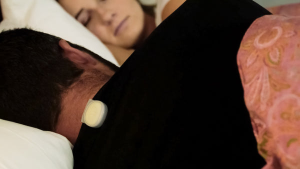
- Positional therapy — methods that discourage back-sleeping, such as wearable position trainers — has shown roughly 70% effectiveness specifically for snorers whose symptoms are tied to sleeping on their back.
Key Takeaways
A few patterns emerge clearly across this data:
- Snoring is overwhelmingly common — affecting a majority of older adults and a significant share of the population overall — yet remains widely undiagnosed when it’s a symptom of something more serious like sleep apnea.
- The people most affected by someone’s snoring are often not the snorer. Bed partners absorb a measurable, quantifiable sleep debt, with real downstream effects on mood, health, and relationship quality.
- Snoring is highly treatable, with multiple evidence-backed options depending on the root cause — positional, anatomical, or weight-related — making it one of the more solvable contributors to poor sleep, once properly identified.
Read Also:
Magnesium Glycinate for Sleep: Why Most People Are Taking the Wrong Dose (And What Actually Works)↗
Best Bed Cooling Systems of 2026: Which One Actually Fits Your Budget and Your Bedroom?↗
SnoreCoach Review 2026: Does This $98 Wearable Actually Stop Snoring?↗