
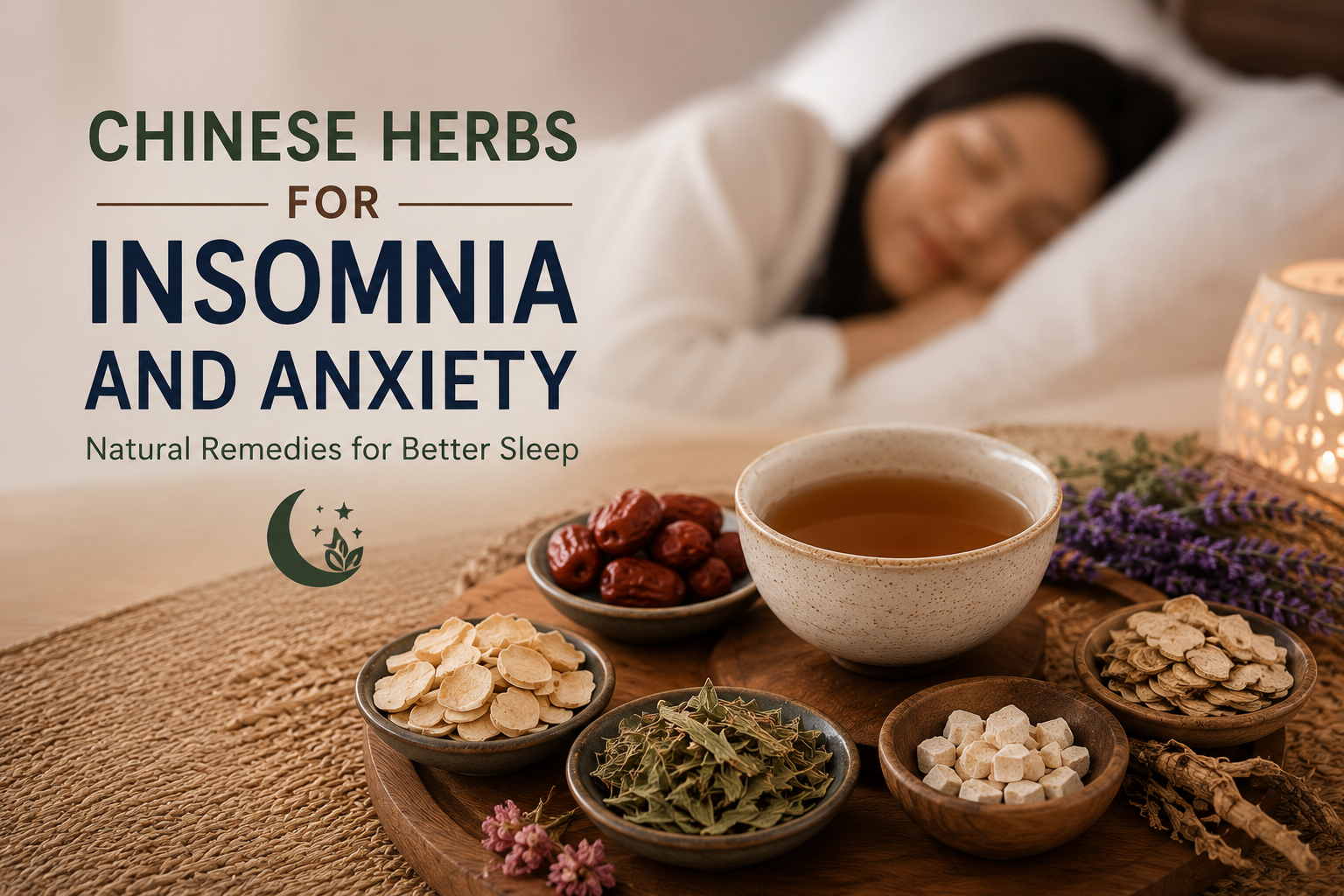
Sleep should be the easiest thing in the world. You close your eyes, drift off, and wake up refreshed. Yet for millions of people, bedtime feels more like a nightly battle. Racing thoughts, anxiety, stress, and an inability to switch off can turn the bedroom into a place of frustration rather than rest.
For over 2,000 years, Traditional Chinese Medicine (TCM) has approached insomnia differently from modern medicine. Instead of simply forcing sleep, TCM seeks to restore balance in the body and calm the mind so that sleep happens naturally. Today, interest in Chinese herbs for insomnia and anxiety is growing rapidly as more people search for natural alternatives and complementary approaches to sleep support. Recent systematic reviews continue to examine the role of Chinese herbal medicine in sleep management, although researchers note that more high-quality studies are still needed.
Understanding the Connection Between Anxiety and Sleep
Anxiety and insomnia often feed each other like two gears locked together. When anxiety rises, sleep becomes difficult. When sleep suffers, anxiety grows stronger. Before long, people find themselves trapped in a cycle where they dread bedtime because they already expect another sleepless night.
Modern science explains this through the body’s stress response. Anxiety activates the nervous system and increases alertness. The brain remains in a state of vigilance, constantly scanning for problems and threats. Even when you’re physically exhausted, your mind may continue running marathons. You replay conversations, worry about tomorrow, and imagine worst-case scenarios. Sound familiar?
Traditional Chinese Medicine recognized this relationship centuries before modern neuroscience existed. TCM practitioners observed that emotional disturbances could disrupt the body’s natural rhythms. Instead of viewing insomnia as a standalone problem, they saw it as a symptom of deeper imbalances involving the heart, liver, spleen, and kidneys. This holistic perspective remains one of the most fascinating aspects of Chinese medicine today.
Why Stress Keeps the Brain Awake
Think of your brain as a busy airport. During the day, flights are constantly arriving and departing. At night, the airport should gradually quiet down. Anxiety prevents that shutdown process from happening. The control tower stays fully staffed, the lights remain on, and the flights keep coming.
Research increasingly shows that calming the nervous system is one of the most effective ways to improve sleep quality. Many herbs traditionally used in Chinese medicine are believed to support relaxation and help regulate the body’s stress response. Similar calming herbs such as valerian, passionflower, lavender, and lemon balm have also demonstrated potential sleep-supporting effects in modern studies.
What Traditional Chinese Medicine Says About Insomnia
Unlike Western medicine, which often focuses on symptoms, Traditional Chinese Medicine seeks to identify the underlying pattern causing insomnia. Two people may both struggle to sleep, yet receive entirely different herbal recommendations because their root causes differ.
One person might experience excessive stress and mental overactivity. Another might suffer from exhaustion and depleted energy. A third could have emotional tension and irritability disrupting sleep. TCM recognizes these distinctions and adapts treatment accordingly.
The Concept of Shen (Spirit)
One of the most important ideas in Chinese medicine is the concept of Shen, often translated as spirit, consciousness, or mind. When Shen is calm and anchored, sleep comes naturally. When Shen is disturbed, sleep becomes fragmented, restless, or impossible.
Practitioners often describe anxiety and insomnia as signs that Shen has become unsettled. Certain herbs are traditionally used specifically to nourish and calm Shen, creating a foundation for deeper, more restorative sleep.
Common TCM Patterns Behind Poor Sleep
Several patterns frequently appear in people suffering from insomnia:
| TCM Pattern | Common Symptoms |
|---|---|
| Heart Blood Deficiency | Difficulty falling asleep, anxiety, palpitations |
| Liver Qi Stagnation | Irritability, stress, racing thoughts |
| Yin Deficiency | Night sweats, waking during the night |
| Spleen Qi Deficiency | Fatigue, overthinking, poor concentration |
| Heart-Kidney Disharmony | Chronic insomnia, emotional instability |
Understanding these patterns helps explain why no single herb works for everyone.
Can Chinese Herbs Really Help?
This is the question most people ask first.
The answer is nuanced. Modern research on Chinese herbal medicine shows promising results, but scientists continue to call for higher-quality studies. Several systematic reviews and meta-analyses have found potential benefits for insomnia, while also noting limitations in study design and consistency.
What Current Research Shows
A 2025 systematic review and network meta-analysis highlighted growing evidence supporting Chinese herbal medicine for insomnia management while emphasizing the need for stronger clinical research.
The encouraging news is that many studies report fewer adverse effects compared with conventional sleep medications. Researchers have also identified specific herbs and formulas that repeatedly appear in successful insomnia treatments. One herb stands out above all others: Suan Zao Ren, also known as Ziziphus seed.
The key takeaway is that Chinese herbs may help some individuals improve sleep quality and reduce anxiety, but they should be viewed as part of a comprehensive sleep strategy rather than a miracle cure.
The Most Effective Chinese Herbs for Insomnia and Anxiety
Suan Zao Ren (Ziziphus Seed)
If there were a superstar in Chinese sleep medicine, Suan Zao Ren would be it.
This herb has been used for centuries to calm the mind and support restful sleep. It was identified as one of the most frequently used herbs in insomnia-focused Chinese medicine research.
A small placebo-controlled study found that Ziziphus spinosa improved subjective sleep quality, total sleep time, and sleep efficiency in participants with insomnia.
Traditionally, Suan Zao Ren is used for:
- Difficulty falling asleep
- Frequent waking
- Anxiety-related insomnia
- Irritability
- Emotional restlessness
Bai Zi Ren
Bai Zi Ren, derived from arborvitae seeds, is another classic sleep herb. TCM practitioners often use it to nourish the heart and calm the spirit.
People experiencing anxiety, nervousness, and persistent worry may particularly benefit from formulas containing Bai Zi Ren. Its traditional role focuses on emotional grounding and relaxation.
Fu Shen
Fu Shen is a medicinal fungus associated with tranquility and emotional stability. In Traditional Chinese Medicine, it is often recommended for individuals who experience excessive worrying and mental overactivity.
Fu Shen is frequently combined with other calming herbs to create balanced sleep-support formulas.
He Huan Pi
Known as the “Tree of Happiness” bark, He Huan Pi has a long history of use for emotional wellbeing.
TCM practitioners commonly recommend it when insomnia is linked to emotional stress, sadness, frustration, or anxiety. It is considered one of the premier herbs for lifting emotional burdens and promoting inner calm.
Long Gu
Long Gu, traditionally known as Dragon Bone, is highly regarded for calming anxiety and stabilizing emotional disturbances. It appears in several classic formulas used for insomnia and nervousness. Community discussions among Chinese medicine practitioners frequently highlight its role in reducing restlessness and excessive mental activity.
Mu Li
Mu Li, or Oyster Shell, is often paired with Long Gu. Together they are believed to anchor excessive energy, calm agitation, and support more stable sleep patterns. Traditional formulations containing Mu Li are commonly used for anxiety-related sleep disturbances.
Traditional Chinese Herbal Formulas for Better Sleep
Chinese medicine often relies on formulas rather than individual herbs. The belief is simple: herbs work better together than alone.
Gui Pi Tang
Gui Pi Tang is one of the most frequently cited formulas in insomnia research. It is traditionally used for individuals who experience poor sleep due to overthinking, mental exhaustion, and anxiety. Researchers identified it as one of the most commonly studied standardized formulas for insomnia.
Suan Zao Ren Tang
This classic formula centers around Suan Zao Ren and remains one of the most popular sleep remedies in Chinese medicine.
It is traditionally recommended for:
- Difficulty staying asleep
- Nighttime anxiety
- Irritability
- Restlessness
Many practitioners consider it the foundational formula for insomnia linked to emotional stress.
Chai Hu Jia Long Gu Mu Li Tang
This formula combines emotional regulation with calming herbs. Traditionally, it is used for anxiety, tension, insomnia, irritability, and emotional instability. Long Gu and Mu Li provide calming effects, while other ingredients help address underlying imbalances.
Chinese Herbs vs Sleep Medications
Many people exploring Chinese herbs are searching for alternatives to prescription sleep medications.
| Factor | Chinese Herbs | Sleep Medications |
|---|---|---|
| Approach | Addresses patterns and balance | Symptom-focused |
| Dependency Risk | Generally lower | Can be higher |
| Speed of Action | Often gradual | Usually rapid |
| Side Effects | Typically milder | May be significant |
| Personalization | Highly individualized | Standardized dosing |
That doesn’t mean herbs are automatically safer or better. Sleep medications can be extremely valuable when prescribed appropriately. Chinese herbs may offer additional support, particularly when anxiety plays a major role in sleep problems.
Benefits and Limitations
Benefits include a holistic approach, long history of traditional use, and potential emotional support. Limitations include variability in products, inconsistent research quality, and slower onset of benefits.
The best results often come from integrating evidence-based medical care, healthy sleep habits, and carefully selected complementary therapies.
How to Use Chinese Herbs Safely
Natural does not always mean risk-free.
Herbal products can interact with medications, affect medical conditions, and vary in quality. Some herbal formulas contain multiple ingredients that may not be appropriate for everyone.
Potential Side Effects and Interactions
Potential side effects can include:
- Digestive discomfort
- Dizziness
- Drowsiness
- Allergic reactions
- Medication interactions
Reports from both clinical literature and community discussions highlight the importance of discussing herbal use with qualified healthcare professionals, especially when combining herbs with prescription sleep or anxiety medications.
Pregnant individuals, nursing mothers, children, and people with chronic medical conditions should seek professional guidance before starting any herbal program.
Lifestyle Habits That Enhance Herbal Effectiveness
Herbs work best when supported by healthy sleep habits.
Imagine trying to fill a bucket while leaving a hole in the bottom. That is what taking sleep herbs without addressing lifestyle factors often looks like.
Creating a consistent bedtime routine can dramatically improve results. Helpful habits include limiting screens before bed, reducing caffeine intake, maintaining regular sleep schedules, and creating a cool, dark sleep environment.
Acupressure and Sleep
Another Traditional Chinese Medicine practice gaining attention is acupressure. Experts suggest that stimulating specific pressure points may help calm the nervous system, reduce anxiety, and improve sleep quality. Emerging research supports its use as a complementary strategy rather than a standalone treatment.
Combining herbal support, stress management, movement, and good sleep hygiene creates a stronger foundation for lasting improvement.
Conclusion
Chinese herbs for insomnia and anxiety represent one of the oldest sleep-support traditions in the world. While modern research is still evolving, evidence suggests that certain herbs and formulas may help improve sleep quality, calm anxiety, and support emotional balance when used appropriately.
Among the most respected remedies are Suan Zao Ren, Bai Zi Ren, Fu Shen, He Huan Pi, Long Gu, and Mu Li, along with traditional formulas such as Gui Pi Tang, Suan Zao Ren Tang, and Chai Hu Jia Long Gu Mu Li Tang. These remedies reflect the unique TCM philosophy that true sleep comes not from forcing the body to rest, but from restoring harmony between mind and body.
For anyone struggling with chronic insomnia or anxiety, Chinese herbal medicine may offer a valuable complementary approach. The most effective path usually combines professional medical guidance, evidence-based sleep practices, and a personalized approach tailored to the individual’s needs.
FAQs
1. What is the best Chinese herb for insomnia?
Suan Zao Ren (Ziziphus seed) is often considered the most widely used and researched Chinese herb for insomnia and anxiety-related sleep problems.
2. How long do Chinese herbs take to work for sleep?
Results vary. Some people notice improvements within days, while others may require several weeks of consistent use.
3. Are Chinese herbs safer than sleeping pills?
Not necessarily. Herbs can still cause side effects and interactions. Safety depends on the specific herb, dosage, and individual circumstances.
4. Can Chinese herbs help anxiety as well as insomnia?
Many traditional sleep formulas are specifically designed to calm emotional disturbances and reduce anxiety alongside improving sleep quality.
5. Should I take Chinese herbs without consulting a practitioner?
It is generally best to consult a qualified healthcare professional or licensed Traditional Chinese Medicine practitioner, especially if you take medications or have existing health conditions.