

There are few things more frustrating than lying in bed, exhausted, only to be kept awake by a relentless cycle of sneezing, sniffles, and a completely blocked nose. Allergic rhinitis, commonly known as hay fever, doesn’t clock out at 5 PM. For millions of adults, it invades the bedroom, turning what should be a sanctuary of rest into a source of nightly frustration. This constant nasal congestion is a primary thief of sleep, leading to next-day fatigue, brain fog, and a diminished quality of life.
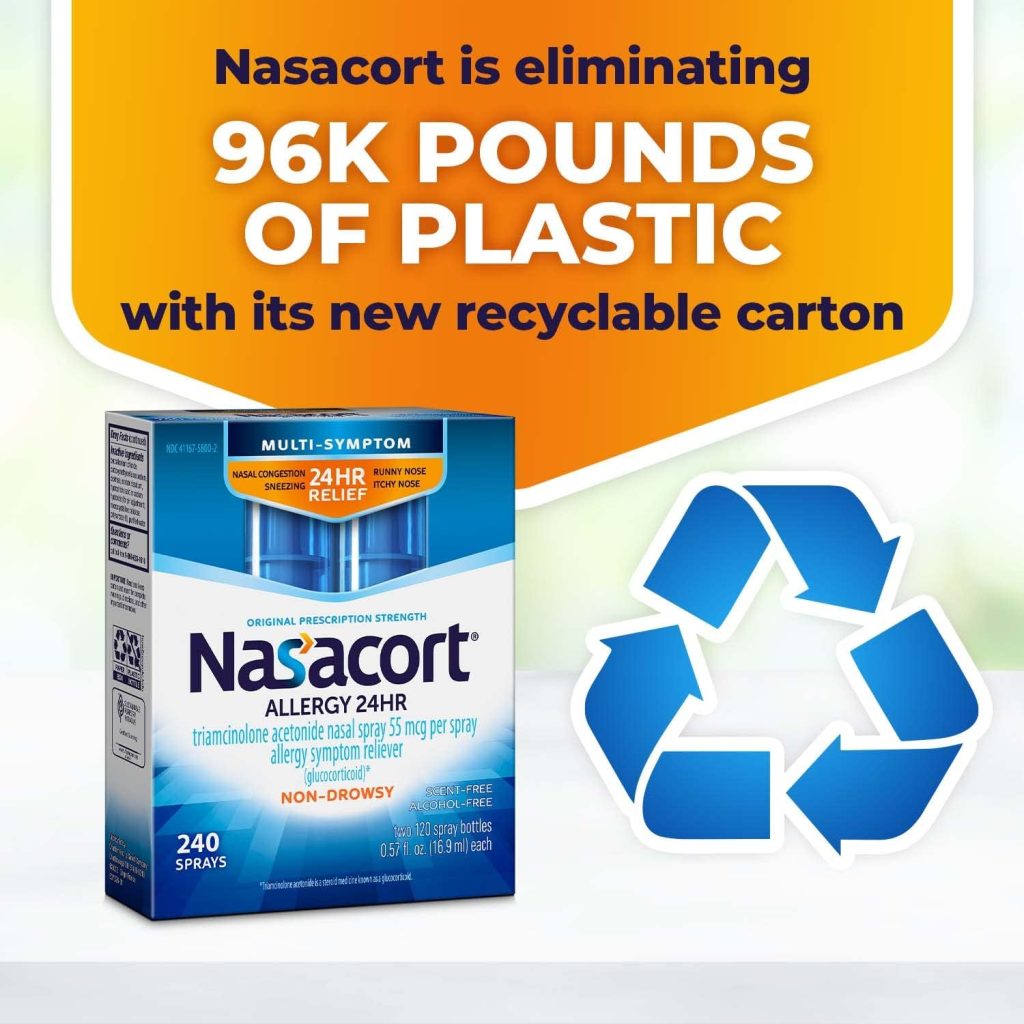
If you’re searching for a solution, you’ve likely encountered Nasacort 24HR Allergy Nasal Spray for Adults. It’s a leading over-the-counter (OTC) medication promising 24-hour relief. But how does it work? Is it right for you? And most importantly, can it truly help you reclaim those precious hours of uninterrupted sleep?
This definitive guide will dive deep into everything you need to know about Nasacort. We’ll explore its mechanism of action, its specific benefits for sleep, provide detailed usage instructions, and see how it stacks up against the competition in 2025 and beyond. Our goal is to empower you with the knowledge to breathe easier and sleep better.
What is Nasacort 24HR and How Can It Help You Sleep?
At its core, Nasacort 24HR Allergy Nasal Spray for Adults is a corticosteroid nasal spray. This classification is important—it’s not an instant-relief decongestant spray, nor is it an antihistamine. Instead, it takes a more strategic, long-term approach to managing allergy inflammation, which is precisely why it’s so effective for chronic symptoms that disrupt sleep.
The Active Ingredient: Triamcinolone Acetonide Explained
The powerhouse behind Nasacort is its active ingredient: triamcinolone acetonide. This is a synthetic corticosteroid, a type of anti-inflammatory medicine. When you have an allergic reaction to triggers like pollen, dust mites, or pet dander, your immune system goes into overdrive. It releases chemicals, like histamine, that cause inflammation in the nasal passages. This inflammation leads to the all-too-familiar symptoms: swelling, congestion, runny nose, and sneezing.
Triamcinolone acetonide works by directly targeting and reducing this inflammation at the source. It doesn’t just mask the symptoms; it calms the underlying immune response.
How a Steroid Nasal Spray Tackles Allergy Symptoms at the Source
Think of your allergic reaction as a small fire in your nasal passages. Antihistamines are like throwing a blanket on the flames—they help, but they’re dealing with the aftermath. A decongestant spray forces the blood vessels to constrict, effectively “hiding” the fire for a short while, but the risk of a rebound effect is high.
Nasacort, however, is like a fire prevention system. It works on the cellular level to inhibit the release of those inflammatory chemicals in the first place. By consistently using it, you prevent the “fire” from starting, leading to a significant reduction in overall nasal inflammation. This is crucial because it’s this inflammation that physically blocks your airway while you sleep.
The Direct Link Between Nasal Congestion and Disrupted Sleep
Obstructed nasal breathing is a primary driver of sleep fragmentation. When you can’t breathe through your nose, you’re forced to breathe through your mouth. This leads to:
- Dry mouth and throat: Waking up feeling parched and needing water.
- Snoring: The turbulent airflow through a relaxed throat and oral passage causes snoring, which can disrupt your sleep and your partner’s.
- Sleep Apnea Aggravation: For those with mild sleep apnea, nasal congestion can significantly worsen the condition.
- Reduced Sleep Quality: Even without full awakenings, congested breathing leads to more light sleep and less restorative deep sleep.
By effectively reducing nasal inflammation and congestion, Nasacort directly addresses this physical barrier to sleep, allowing for normal, quiet nasal breathing throughout the night.
Why Choose Nasacort for Night-Time Allergy Relief?
With numerous allergy medications on the shelf, what makes Nasacort a particularly strong candidate for those focused on improving their sleep? The answer lies in its unique combination of long-lasting, non-drowsy, and targeted relief.
24-Hour Relief: The Key to Uninterrupted Sleep
The “24HR” in its name isn’t just marketing. A single daily dose is designed to provide full-day and full-night relief. This is critical for sleep because it means the medication’s anti-inflammatory effects are still actively working while you’re in bed. You don’t have to worry about it wearing off at 2 AM, leaving you congested and struggling to breathe. This all-day coverage helps you fall asleep easier and, more importantly, stay asleep.
Non-Drowsy Formula: Avoid Next-Day Grogginess
This is perhaps the most significant advantage over many oral antihistamines. Older first-generation antihistamines (like diphenhydramine) are notorious for causing drowsiness, which might seem helpful for sleep but often leads to a “hangover” effect the next day—grogginess, brain fog, and impaired performance. Even some newer non-drowsy formulas can cause drowsiness in a subset of users.
As a topical steroid with minimal systemic absorption, Nasacort does not cause drowsiness. It treats the allergy symptom preventing sleep (congestion) without introducing a chemical sedative. You wake up feeling refreshed, not medicated.
Drug-Free Relief: A Medicated Solution Without Systemic Side Effects
While “drug-free” might sound like an oxymoron, the concept here is that Nasacort acts locally. It’s delivered precisely where it’s needed—in your nose. Only a tiny, negligible amount is absorbed into the bloodstream. This means it avoids the systemic side effects sometimes associated with oral medications, such as:
- Drowsiness or jitters/nervousness
- Dry mouth and eyes
- Urinary retention
- Potential interactions with other medications
For adults who may be on other medications or who prefer a targeted treatment, this localized action is a major benefit.
Using Nasacort 24HR Correctly for Maximum Effectiveness
Corticosteroid nasal sprays are notoriously misused. Improper technique can lead to poor efficacy, side effects like nosebleeds, and user frustration. To get the full sleep-promoting benefits, correct application is non-negotiable.
Step-by-Step Guide: How to Prime and Administer Your Spray
- Blow Your Nose: Gently clear your nasal passages of any mucus.
- Shake the Bottle: Shake the product gently before each use.
- Prime the Pump (First Use or After 2 Weeks): Point the actuator away from your face. Press down on the shoulders of the pump until a fine mist appears. This may take several sprays.
- Positioning is Key: Tilt your head slightly forward. Insert the tip into one nostril. Use your opposite hand to hold the bottle (e.g., right hand for left nostril). This angles the spray toward the inflamed nasal passages and away from the sensitive center septum.
- Spray and Breathe: As you begin to press down on the pump, breathe in gently through your nose. Do not snort sharply. This allows the mist to be carried deep into the nasal cavity.
- Repeat: Repeat the process for the other nostril.
- Avoid Sniffing/Snorting: After spraying, try not to sniff hard or immediately blow your nose for at least 15-30 minutes. This gives the medication time to settle and work.
Ideal Timing: When to Use Nasacort for the Best Night’s Sleep
Consistency is more important than the exact hour, but for optimal sleep benefits, using Nasacort in the evening, about 30-60 minutes before bed, is ideal. This ensures the anti-inflammatory effect is at its peak as you lie down. Furthermore, if you experience any slight aftertaste (which is uncommon), it will likely fade by the time you fall asleep.
However, the most critical factor is to use it every day for the duration of allergy season, even if you feel fine. It works best as a preventative maintenance medication, not an as-needed rescue inhaler.
Common Mistakes to Avoid for First-Time Users
- Pointing the Spray Straight Back: This directs the spray onto the nasal septum, increasing the risk of irritation and nosebleeds. Always angle it outward.
- Snorting Too Hard: This pulls the medication into your throat where it’s ineffective and can cause an unpleasant taste.
- Giving Up Too Soon: It can take several days to a full week to experience maximum benefit. Don’t stop after two days if you don’t feel 100% better.
- Overusing: More is not better. Stick to one spray per nostril per day unless otherwise directed by a doctor. Overuse will not speed up relief.
What to Expect: The Nasacort Timeline for Relief
Managing expectations is key to success with any medication. Nasacort is not a magic bullet for instant relief, but its methodical approach leads to profound and sustainable results.
The First Use: Immediate Sensations and Initial Effects
When you first use Nasacort, you might notice a few things:
- A mild, faint medicinal smell or taste.
- A slight feeling of moisture in the nose or the back of the throat.
- For some, a very mild, transient stinging or irritation.
You should not expect your congestion to vanish immediately. The first dose is the beginning of a process.
Building Up to Full Efficacy: The First Week of Use
This is the most important period. The anti-inflammatory effect is cumulative.
- Days 1-3: You may begin to notice a slight reduction in sneezing and runny nose. Congestion may start to lessen.
- Days 4-7: This is when most users experience a significant breakthrough. Nasal congestion should be markedly improved, and breathing through the nose becomes much easier. This is the point where sleep quality often shows dramatic improvement.
- Beyond Week 1: Continued daily use provides consistent, 24-hour control of symptoms.
Long-Term Management: Using Nasacort Throughout Allergy Season
For seasonal allergy sufferers, Nasacort is meant to be used daily for the entire duration of your allergy season. It is safe for long-term use under OTC guidelines. You can start using it just before your allergy season begins (as predicted by pollen forecasts) to get ahead of your symptoms. For perennial allergy sufferers (e.g., from dust mites or pet dander), it can be used indefinitely, though it’s always wise to discuss long-term management with a doctor.
Nasacort vs. The Competition: A 2025 Comparison
The OTC allergy aisle can be overwhelming. Here’s how Nasacort compares to other popular categories of allergy relief. The following table provides a clear, at-a-glance comparison.
| Feature | Nasacort 24HR (Triamcinolone) | Flonase Sensimist (Fluticasone Furoate) | Astepro Allergy (Azelastine HCl) | Allegra (Fexofenadine) – Oral |
|---|---|---|---|---|
| Drug Class | Corticosteroid | Corticosteroid | Antihistamine | Antihistamine (Oral) |
| Primary Use | Prevent & reduce inflammation | Prevent & reduce inflammation | Block histamine (fast relief) | Block histamine (systemic) |
| Onset of Action | ~24 hrs (full effect in days) | ~24 hrs (full effect in days) | 15-30 minutes | 60 minutes |
| Dosing | Once daily | Once daily | Twice daily | Once daily |
| Drowsiness Risk | None | None | Low (for some users) | None |
| Key Benefit | 24-hr preventative relief, non-drowsy | 24-hr preventative relief, gentle mist | Fast-acting for breakthrough symptoms | Whole-body relief (hives, itching) |
| Potential Drawback | Delayed onset, nasal irritation | Delayed onset, can cause headache | Bitter taste, twice-daily dosing | Can be less effective for severe congestion |
| Best For | 24/7 preventative care, sleep | Those sensitive to traditional spray feel | Fast relief during an attack | Multi-symptom relief beyond the nose |
| Price (Est. 2025) | ~$18 – $24 for 120 sprays | ~$20 – $26 for 120 sprays | ~$22 – $28 for 200 sprays | ~$22 – $30 for 30 tablets |
Nasacort vs. Flonase (Fluticasone): Key Differences in Formula and Feel
Both are corticosteroid sprays and are equally effective for most people when used correctly. The choice often comes down to personal preference:
- Mist Sensation: Many users find Flonase Sensimist to have a softer, gentler, and more “dry” mist compared to the traditional wetter mist of standard Nasacort and Flonase. However, reformulations are common.
- Dosing: Both are now marketed for once-daily use.
- Active Ingredient: The difference between triamcinolone (Nasacort) and fluticasone (Flonase) is minimal for the average user. Some individuals may find one slightly more effective or better tolerated than the other.
Nasacort vs. Antihistamine Sprays: Azelastine (Astepro, Astelin)
This is a key comparison. Azelastine is an antihistamine spray, not a steroid.
- Speed: Azelastine works much faster (within 15-30 minutes), making it excellent for sudden “rescue” relief.
- Taste: It is infamous for causing a bitter taste in the mouth for many users, which can be disruptive, especially at night.
- Dosing: It typically requires twice-daily dosing, which can be easier to forget.
- Best Use: Many experts recommend using them together—Astepro for fast morning relief and Nasacort in the evening for preventative, round-the-clock control and sleep support.
Nasacort vs. Oral Antihistamines: Pills vs. Targeted Spray
Oral antihistamines like Allegra, Zyrtec, or Claritin work throughout the body, which is great for symptoms like itchy skin or hives. However:
- Congestion Focus: They are generally less effective at relieving severe nasal congestion than corticosteroid sprays.
- Systemic Effects: As oral medications, they travel through your bloodstream, which can lead to systemic side effects (e.g., dry mouth with Zyrtec, potential drowsiness in some).
- Combination Therapy: For severe allergies, a doctor will often recommend using both a daily nasal spray like Nasacort and an oral antihistamine for comprehensive control.
Safety, Side Effects, and Frequently Asked Questions
Nasacort is generally very safe for adults when used as directed. However, being informed about potential side effects ensures a positive experience.
Understanding Potential Side Effects and How to Minimize Them
The most common side effects are local and mild:
- Nosebleeds (Epistaxis): The most frequent issue, usually due to incorrect spraying technique (hitting the septum).
- Nasal Irritation/Stinging: A temporary sensation that usually subsides with continued use.
- Headache: Occasionally reported.
- Unpleasant Taste/Smell: Usually mild and fades quickly.
To minimize these: Use proper technique (angling the spray), and ensure you are not overusing the product.
Who Should Not Use Nasacort? Important Contraindications
While safe for most, you should consult a doctor before using Nasacort if:
- You have had recent nasal surgery or a nasal injury that has not healed.
- You have glaucoma or cataracts.
- You have an active infection in your nose (e.g., herpes simplex).
- You have tuberculosis or any untreated fungal, bacterial, or viral systemic infection.
- You are pregnant or breastfeeding (consult a doctor first).
- You are on other corticosteroids (like for asthma).
Expert Answers to Your Most Common Nasacort Questions
Can I become addicted to Nasacort?
No. Unlike decongestant sprays (e.g., Afrin), which can cause rebound congestion and a cycle of dependency, corticosteroid sprays like Nasacort are not habit-forming. You will not become “addicted” to them.
How long can I safely use Nasacort?
You can use it daily for the entire duration of your allergy season, which could be months. For year-round allergies, it’s considered safe for long-term use, but it’s advisable to discuss this with your doctor to ensure it’s the best strategy for you.
What if I miss a dose?
If you miss a dose, take it as soon as you remember. If it is almost time for your next dose, skip the missed dose and go back to your regular schedule. Do not double the dose to catch up.
Can I use Nasacort with other allergy medicines?
Yes, it is generally safe to use with oral antihistamines like Allegra or Zyrtec. In fact, this is a common and effective combination for tackling multiple symptoms. However, always read labels and consult a pharmacist if you are unsure about drug interactions.
In conclusion, Nasacort 24HR Allergy Nasal Spray for Adults is not just an allergy treatment; it’s a powerful tool for restoring sleep. By taking a preventative, targeted, and non-drowsy approach to reducing nasal inflammation, it directly addresses the primary physical barrier to restful sleep caused by allergies. While it requires patience and proper technique in the first week, the payoff is 24-hour relief and a significantly improved quality of sleep and life. If nighttime congestion has been your enemy, Nasacort may be the key to declaring a truce and finally getting the rest you deserve. As always, for personalized medical advice, consult with your healthcare provider.