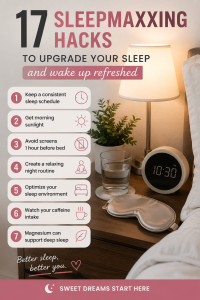

Waking up feeling tired, sluggish, and reaching straight for a third cup of coffee has unfortunately become the norm. But a viral wellness movement is completely shifting the narrative: Sleepmaxxing.
Rather than treating sleep as an afterthought, “sleepmaxxing” treats a night of rest like an elite athletic performance. It is the practice of optimizing your environment, routine, and biology to unlock deep, uninterrupted sleep, accelerate muscle recovery, and maximize daytime energy.
If you are ready to stop tossing and turning and start waking up fully charged, this science-backed Sleepmaxxing Checklist from Sleeping Zones is your ultimate blueprint.
What is Sleepmaxxing?
At its core, sleepmaxxing goes beyond just tracking your hours. It’s a holistic approach that focuses heavily on sleep quality over sheer quantity. By combining modern biohacking tools with ancestral sleep hygiene principles, you train your body to slip into deeper phases of REM and deep sleep faster and stay there longer.
📋 The Ultimate Sleepmaxxing Checklist
To get the absolute most out of your night, break your routine down into environmental upgrades and behavioral habits. Here is everything you need to cross off your list tonight.
1. Optimize Your Sleep Environment (The “Zone”)
Your bedroom should be a sanctuary engineered entirely for rest.
- Hang Velvet Blackout Curtains: Light is the enemy of melatonin production. Ensure your room is pitch black to keep your circadian rhythm perfectly aligned.
- Swap to High-Thread-Count Silk Pillowcases: Silk reduces friction on your hair and skin, preventing wrinkles and keeping you cool throughout the night. Pair it with a silk hair turban to keep your nighttime hair routines intact.
- Drop the Thermostat: The ideal science-backed temperature for sleeping is between 60°F and 67°F (15°C to 19°C). Your body needs to drop its core temperature to initiate deep sleep.
2. The Biohacking Upgrades
This is where the “maxxing” truly comes into play. These tools elevate your baseline sleep into high-performance recovery.
- Wear a Weighted Velvet Sleep Mask: A contoured, weighted mask blocks out 100% of ambient light while applying gentle, calming pressure over your eyes to stimulate the vagus nerve.
- Try Nasal Breathing Patches (Mouth Taping): Breathing through your nose increases oxygen intake, reduces snoring, and boosts nitric oxide production. Nasal strips or specialized mouth tape force you to stop mouth-breathing at night.
- Use Silicone Earplugs: Block out micro-disruptions from traffic or a snoring partner that pull you out of deep sleep cycles without you even realizing it.
3. The Sunset Wind-Down Routine
You can’t expect your brain to switch from “100 mph work mode” to “deep sleep” instantly. You need a buffer zone.
- Ditch the Blue Light 2 Hours Before Bed: Blue light from phones and TVs tricks your brain into thinking it’s daytime. Put on blue-light-blocking glasses or turn off screens entirely.
- Mist Your Bed with Bergamot & Vetiver: Aromatherapy works wonders. Spritzing a calming lavender, bergamot, or vetiver sleep mist onto your pillows signals to your brain that it is time to wind down.
- Journal for 10 Minutes: Clear out “brain dump” anxiety. Write down your to-do list for tomorrow or practice a quick gratitude log so your mind stops racing when your head hits the pillow.
4. Supplementing for Deep Sleep
What you put into your body before bed dictates how quickly you can drop into a parasympathetic state.
- Drink Chamomile & Valerian Root Tea: A warm mug of herbal tea decreases anxiety and acts as a mild sedative to prep your nervous system.
- Take a Magnesium-Rich CBD Recovery Bath Soak: Before stepping into bed, soak in a warm bath. The magnesium absorbs through the skin to relax tight muscles, while the drop in body temperature right after the bath triggers instant sleepiness.
- Targeted Herbal Sleep Capsules: If you need an extra push, natural supplements containing Apigenin, L-Theanine, and Magnesium L-Threonate can cross the blood-brain barrier to maximize your sleep depth.
A Sample “Sleepmaxxing” Nightly Timeline
Want to put this checklist into action? Here is what a perfect, optimized evening looks like:
- 8:00 PM: Turn off bright overhead lights; switch to warm lamps. Put on blue-light blockers.
- 8:30 PM: Take a warm bath with magnesium salts. Sip on chamomile tea.
- 9:15 PM: Complete your skincare routine, put on your waffle-knit lounge set, and wrap your hair in a silk turban or heatless curlers.
- 9:30 PM: 10 minutes of journaling or reading a physical book under dim light.
- 9:45 PM: Turn on the “Do Not Disturb” phone settings. Mist the bed, apply nasal patches, put in earplugs, and pull down your weighted sleep mask.
- 10:00 PM: Lights out for 8 hours of uninterrupted recovery.
Why Sleepmaxxing is Worth the Hype
When you commit to optimizing your night, the benefits spill into every waking hour. Consistent deep sleep balances your hunger hormones (ghrelin and leptin), clears out cellular waste from the brain (via the glymphatic system), and spikes your cognitive function.
Stop settling for “okay” sleep. Cross off these zones one by one, and turn your bedroom into the ultimate recovery lab.
For more science-backed guides on optimizing your bedroom environment and circadian rhythm, explore our latest gear guides over at sleepingzones.com.